

CaHA Explained — Mechanism, Benefits, and Key Facts
Many patients may already recognize the name CaHA, as it is a key component in aesthetic treatments such as Radiesse and HArmonyCa.
CaHA is widely known as a collagen stimulator with unique properties. This article explains how CaHA works, the benefits it provides, and its safety profile — offering patients clear information before deciding on treatment.
Table of Content : CaHA
What is CaHA? Understanding the Origin of this Key Ingredient in Aesthetic Treatments
CaHA, short for Calcium Hydroxylapatite, is a dermal filler used to correct wrinkles and deep folds, and restore skin structure. It is synthesized to resemble naturally occurring substances in bones and teeth, presented in the form of microspheres (small spherical particles).
Its standout feature is the ability to stimulate fibroblasts, encouraging the long-term production of collagen and elastin. For this reason, CaHA is frequently included in aesthetic products designed for collagen stimulation and skin rejuvenation.
How CaHA Works
When injected into the skin, CaHA works in two main phases: immediate volumization and long-term collagen stimulation. This dual action follows the same principle as hybrid fillers and other biostimulators.
For example, Radiesse — a collagen biostimulator with CaHA as its main component — works as follows:
- Immediate volumization: The gel and CaHA microspheres add instant volume to the injected area
- Collagen stimulation: As the gel is absorbed, CaHA particles remain and form a scaffold for fibroblasts. These fibroblasts attach and trigger new collagen and elastin production. Over time, CaHA gradually dissolves naturally, leaving behind newly formed collagen that strengthens the skin, improves elasticity, and enhances long-term skin quality.
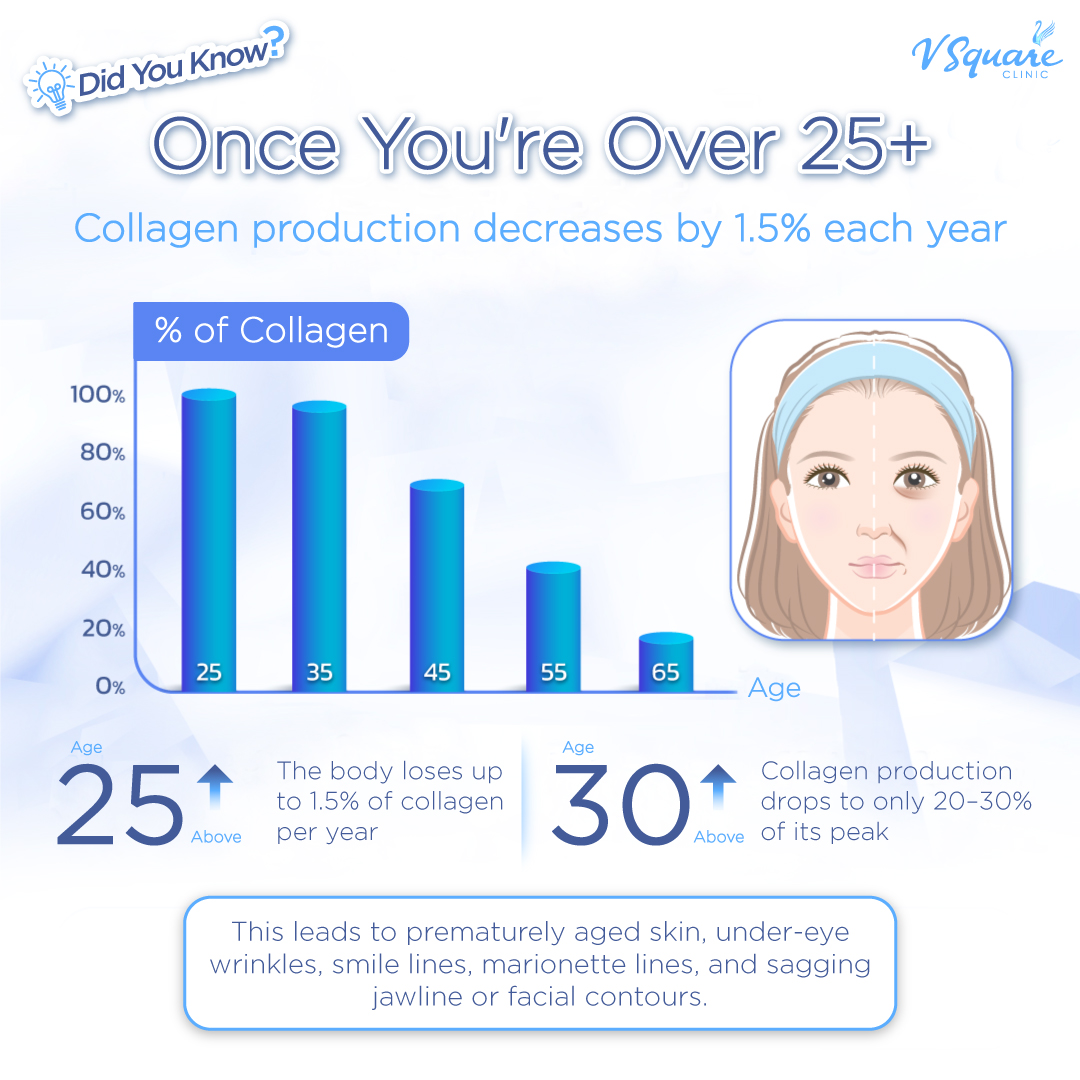
This mechanism highlights the importance of CaHA in stimulating collagen production — a key structural protein that decreases by about 1.5% per year starting at age 25. This explains why collagen biostimulator treatments are increasingly popular today.
Is CaHA Safe?
CaHA is synthesized to closely resemble natural substances in the body. It integrates well with surrounding tissues (biocompatibility), carries a low risk of allergic reactions, and is fully biodegradable. With approvals from the U.S. FDA and CE, CaHA is considered safe when authentic products are used and treatments are performed by experienced doctors in certified clinics.
What Can CaHA Do? What Results Can Patients Expect?
Injecting CaHA restores volume while rejuvenating the skin, offering both immediate and long-term benefits:
- Wrinkle correction and facial contouring: Softens nasolabial folds and marionette lines, adds midface volume, restores sunken cheeks, and enhances jawline definition with a natural look
- Long-term skin quality improvement: Stimulates collagen and elastin production, strengthening skin structure, improving elasticity, reducing fine lines, and enhancing overall skin texture and resilience
Who is CaHA Suitable For?
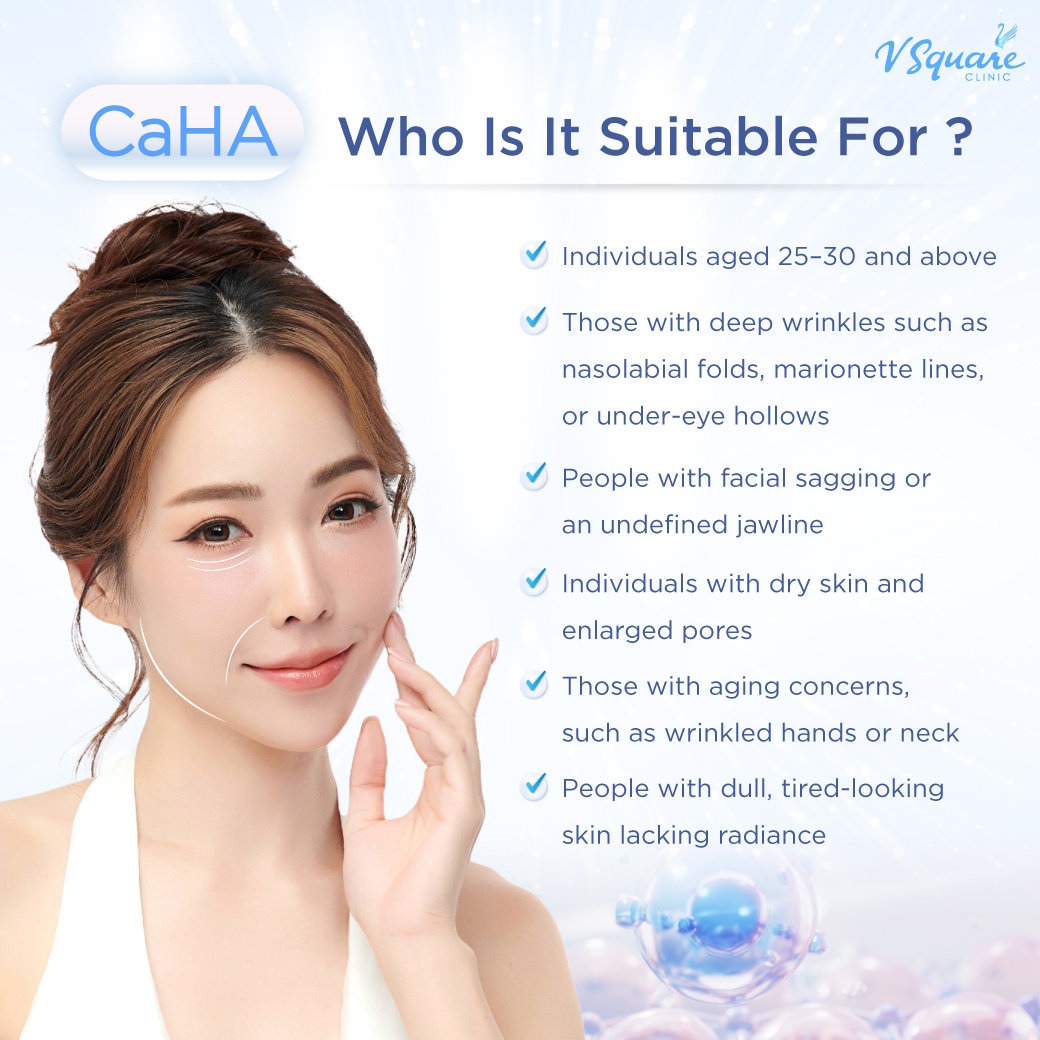
- Individuals with nasolabial folds, marionette lines, or facial sagging
- Those who want to rejuvenate the skin and strengthen skin structure
- Patients with dull or tired-looking skin
- Individuals with wrinkled hands or neck laxity
- Those with collagen loss, loose skin, and decreased elasticity who want firmer, tighter skin
- Patients seeking natural-looking results without dramatic facial reshaping
Which Areas Can CaHA Be Injected Into?
CaHA can be injected into several areas, depending on the specific concerns being addressed. Common areas include nasolabial folds, marionette lines, jawline, mid-cheek, and hands.
However, CaHA is not recommended for delicate areas with thin skin, such as the muscle around the eyes or lips. For individuals seeking under-eye correction or lip reshaping, HA fillers are more suitable because of their softer texture and hydration properties.
How is CaHA Different from HA Fillers?
Both CaHA and Hyaluronic Acid (HA) are dermal fillers, but they are different in composition, mechanism, and clinical applications.
- CaHA functions as a biostimulator, primarily stimulating collagen production for long-term improvement.
- HA fillers are synthesized to mimic natural hyaluronic acid in the body. They retain water, providing immediate plumping and hydration, and are widely used to correct wrinkles and enhance facial contours.
Comparison Table: HA Fillers vs. CaHA
| The Differences between HA Filler and CaHA | ||
|---|---|---|
| Hyaluronic Acid (HA) | Type of Dermal Filler | Calcium Hydroxylapatite (CaHA) |
| Retains water, provides immediate hydration and volumization | Mechanism of action | Stimulates long-term collagen production; CaHA microspheres act as a scaffold for fibroblasts |
| Under-eyes, temples, nasolabial folds, marionette lines, lips, chin | Injection sites | Nasolabial folds, marionette lines, jawline, mid-cheek, hands; not recommended for thin or delicate skin (e.g., under-eyes, lips) |
| Immediate improvement, with noticeable results within 2 weeks | Duration of results | Instant volume plus collagen stimulation for long-term improvement |
| Precise correction of deep wrinkles, facial contouring, or delicate areas such as under-eyes or nasolabial folds | Best suited for | Long-term skin rejuvenation, stronger skin structure, and improved firmness |
Summary:
HA fillers are versatile and suitable for multiple injection sites, making them ideal for contouring and correcting visible wrinkles such as chin augmentation, temple hollows, or under-eye correction.
On the other hand, CaHA is an excellent choice for patients who want to strengthen skin quality and achieve long-term rejuvenation without significantly altering facial features.
Newer treatments now combine the benefits of both — such as HArmonyCa and Neauvia — which will be explained in the following sections.
Which Aesthetic Treatments Contain CaHA?
CaHA is a key component in hybrid fillers and collagen biostimulators. While the main ingredient is the same, differences in particle size, CaHA concentration, and additional compounds give each product its own unique strengths:
Radiesse — Skin Rejuvenation Innovation
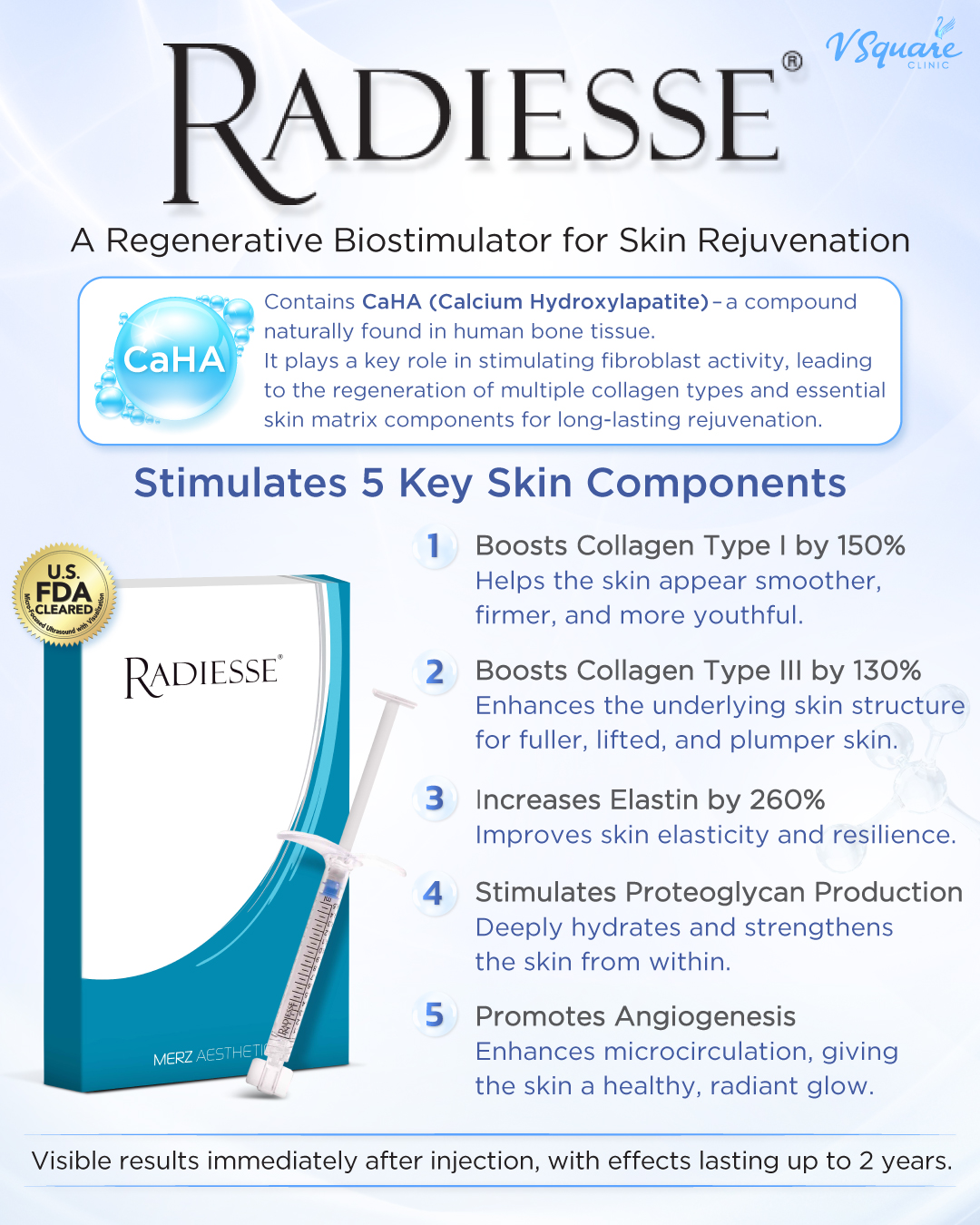
Radiesse is a collagen biostimulator primarily composed of CaHA. It restores fibroblast function and stimulates the production of Type I collagen by 150%, Type III collagen by 130%, elastin by 260%, as well as proteoglycans and angiogenesis. This strengthens skin structure, enhances firmness, smooths deep wrinkles and folds, and adds natural facial volume.
- Ideal injection sites: Mid-cheek, nasolabial folds, marionette lines, hands
- Longevity of results: Up to 2 years
HArmonyCa — Collagen Stimulation with Facial Volume
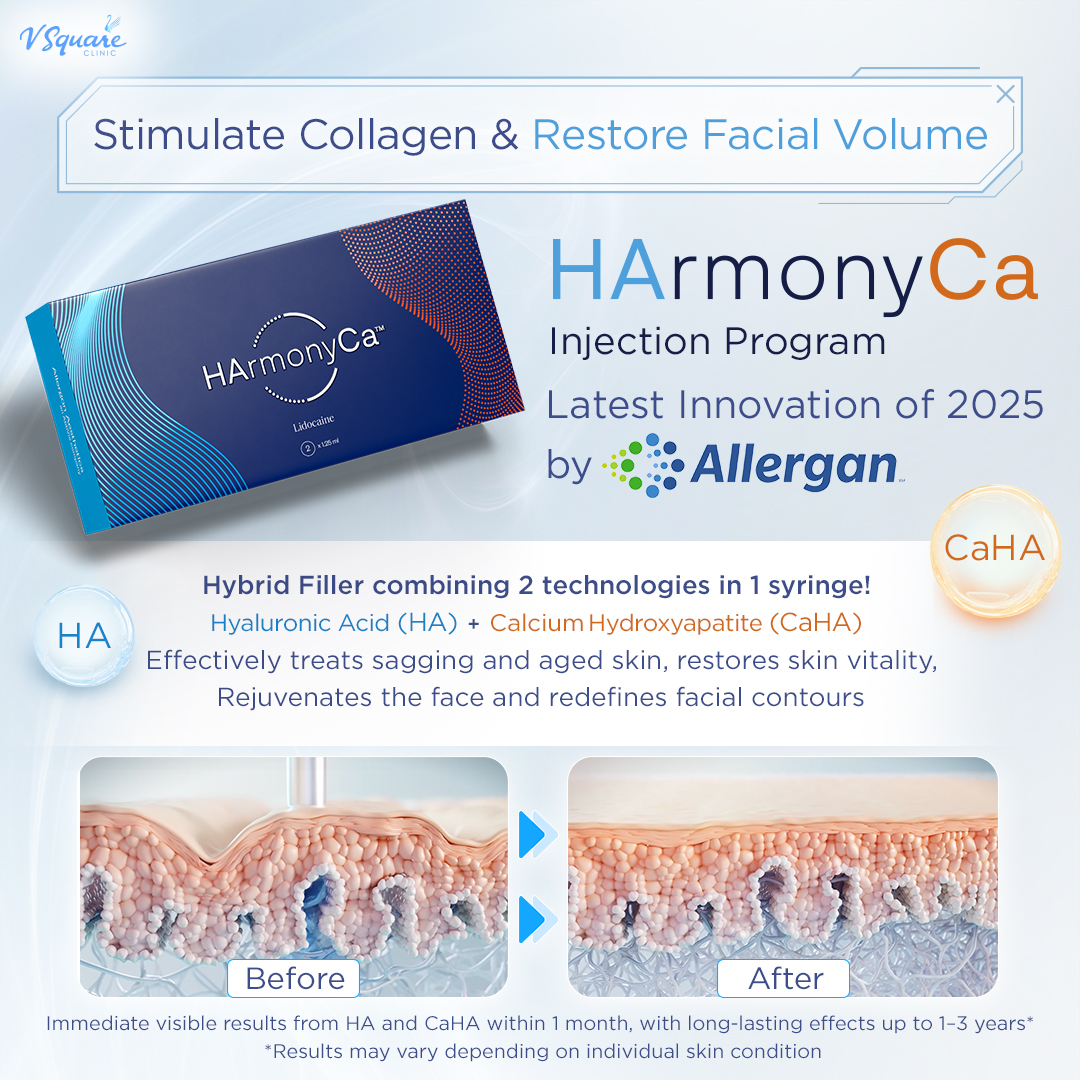
HArmonyCa is a hybrid filler that combines two technologies: filler and collagen biostimulator. It contains both hyaluronic acid (HA) and calcium hydroxyapatite (CaHA).
HA delivers hydration and immediate plumping, giving skin a fuller, refreshed appearance. CaHA stimulates new collagen, improving skin firmness and elasticity, while restoring youthful contours and enhancing jawline definition.
- Ideal injection sites: Mid-cheek, nasolabial folds, marionette lines, jawline, chin
- Longevity of results: 1–3 years (the longest-lasting among current injectable treatments)
Neauvia — Filler with Collagen Stimulation
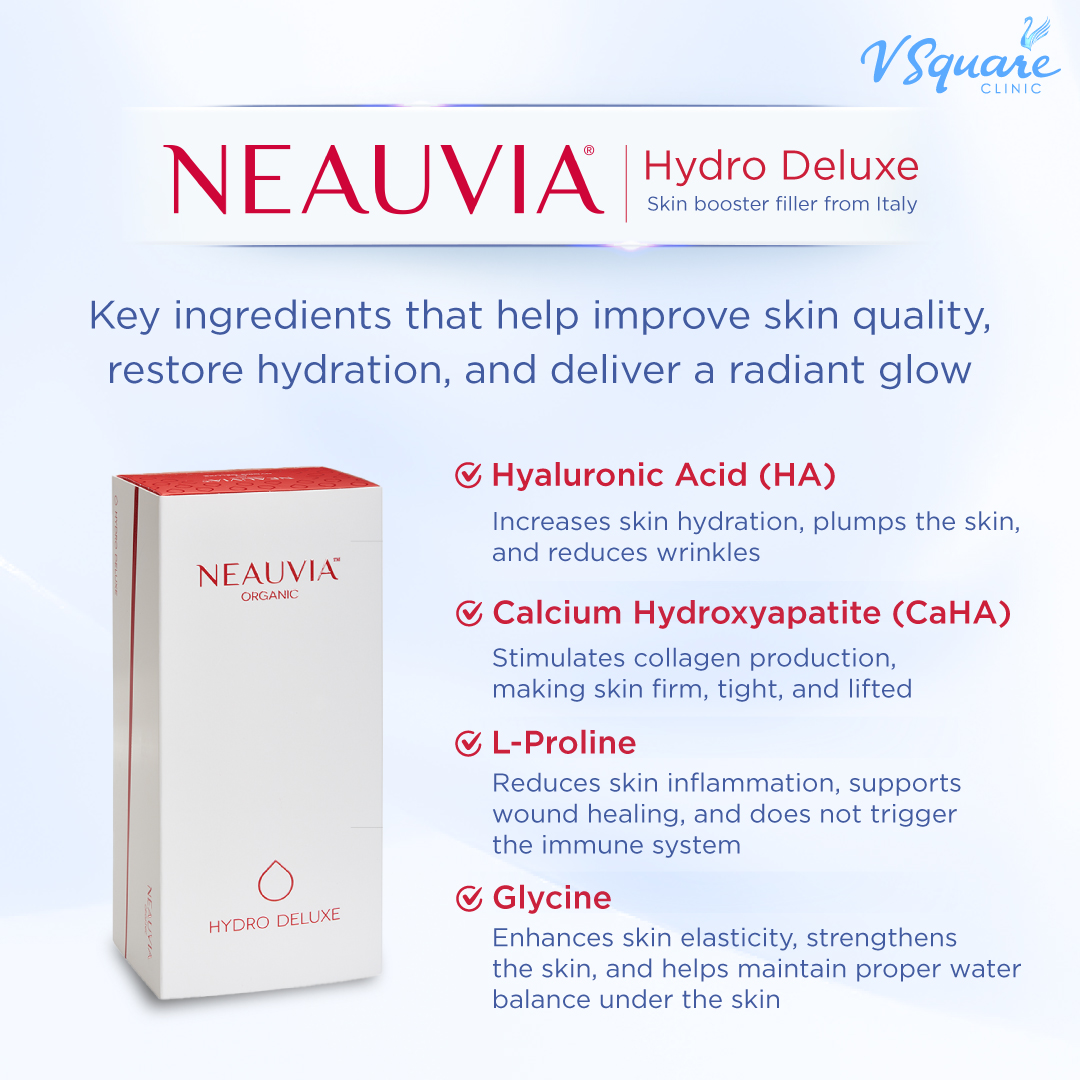
Neauvia Hydro Deluxe is a skin-quality filler that combines non-crosslinked HA for hydration with 0.01% CaHA, making it a collagen biostimulator. This hybrid formula both stimulates collagen production and delivers hydration, improving skin firmness, elasticity, and radiance.
- Ideal injection sites: Face, neck, hands
- Longevity of results: 6–9 months
How Much Does CaHA Cost?
At V Square Clinic, Radiesse, HArmonyCa, and Neauvia are available at prices starting from 16,000–33,000 THB.
Interested in Radiesse, HArmonyCa, or Neauvia at V Square Clinic?
Click here to check our latest promotions.

Is Investing in CaHA Worth It?
CaHA injections go beyond adding volume. They stimulate collagen and elastin production, helping to restore skin structure, improve firmness, and rejuvenate the skin for a more youthful appearance. This makes CaHA a worthwhile long-term investment for individuals seeking multi-dimensional skin improvement.
For best results, patients should always consult with an experienced doctor and choose the most suitable treatment for their skin type and condition — ensuring both safety and desired outcomes.
Reference
- Loghem, J. V., Yutskovskaya, Y. A., & Philip Werschler, W. (2015). Calcium hydroxylapatite: over a decade of clinical experience. The Journal of clinical and aesthetic dermatology, 8(1), 38–49.
- Aguilera, S. B., McCarthy, A., Khalifian, S., Lorenc, Z. P., Goldie, K., & Chernoff, W. G. (2023). The Role of Calcium Hydroxylapatite (Radiesse) as a Regenerative Aesthetic Treatment: A Narrative Review. Aesthetic surgery journal, 43(10), 1063–1090. https://doi.org/10.1093/asj/sjad173

สำหรับผู้อ่านทุกท่านที่มีข้อสงสัยเพิ่มเติม ทีมแพทย์ V Square Clinic ทุกคนยินดีให้คำปรึกษาฟรี โดยไม่มีค่าใช้จ่าย หรือสามารถปรึกษาหมอทาง inbox facebook หรือ Line นี้ได้เลยครับ หมอตอบเองครับ

What Is Hyafilia Filler? Is It Good and How Long Does It Last? — A Complete Guide
Reading Time: 9 minutesHyafilia is a Korean filler known for its smooth, fine gel texture that blends naturally into the skin while still being easy to shape. This significantly reduces the risk of lump formation. But what exactly is Hyafilia? How effective is it? And who is it most suitable for?

Ultherapy Prime Price – How Many Lines for Each Area? How...
Reading Time: 5 minutesWhat is the Ultherapy Prime price, and is it worth it? The Ultherapy Prime price varies depending on the number of lines used. As the latest generation of Ulthera, Ultherapy Prime comes with upgraded functions and enhanced features.

Complete Guide to Ulthera Aftercare — Long-Lasting Result...
Reading Time: 5 minutesWhat should patients know about caring for their skin after Ulthera? In fact, patients can return to daily life immediately. There is no downtime and no need to take leave, since Ulthera uses focused ultrasound technology to lift and tighten the skin without surgery or visible wounds.

What Is Morpheus8? Is It Effective? How Does It Differ fr...
Reading Time: 8 minutesIn recent years, people have become increasingly attentive to holistic skin care, especially treatments designed to restore a youthful appearance. This rising demand has driven rapid advancements in aesthetic technology. One innovation worth highlighting is Morpheus8

Understanding Ulthera SPT — How It Works, What It Treats,...
Reading Time: 11 minutesWhen it comes to non-surgical skin tightening, many people are already familiar with Ulthera, a well-known treatment for lifting sagging skin, refining the jawline, and restoring firmness. Recently, however, a new term has gained attention: Ulthera SPT.
