
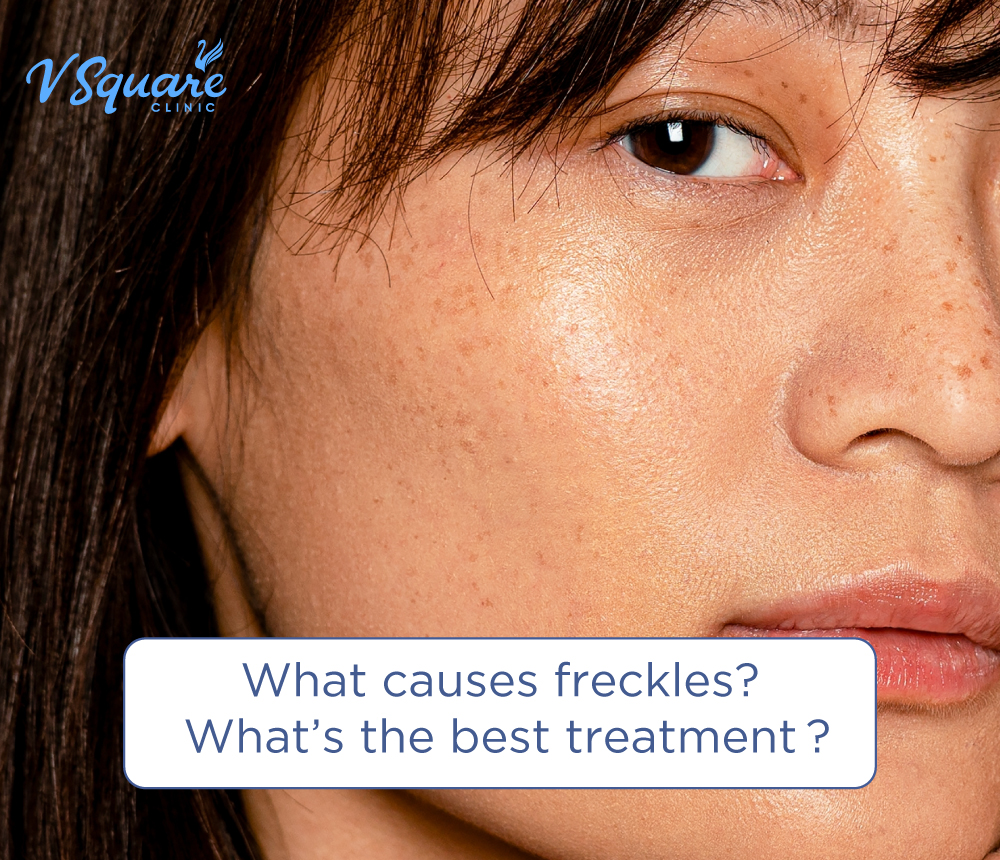
Freckles and Dark Spots
Freckles are one of the most common types of dark spots that can affect your confidence, making your skin appear dull and uneven in tone. This article covers what causes superficial and deep freckles, the different types of freckles, where they usually appear, and the most effective ways to prevent and treat them.
Table of Content : Freckles
What Are Freckles?
Freckles are small, flat dark spots that appear on the skin, ranging from light brown to dark brown or even black. Unlike pimples or moles, freckles do not protrude above the skin’s surface. They form when melanocytes — the cells that produce skin pigment — create excess melanin, causing it to build up in the epidermis (outer skin layer) and appear as visible spots.
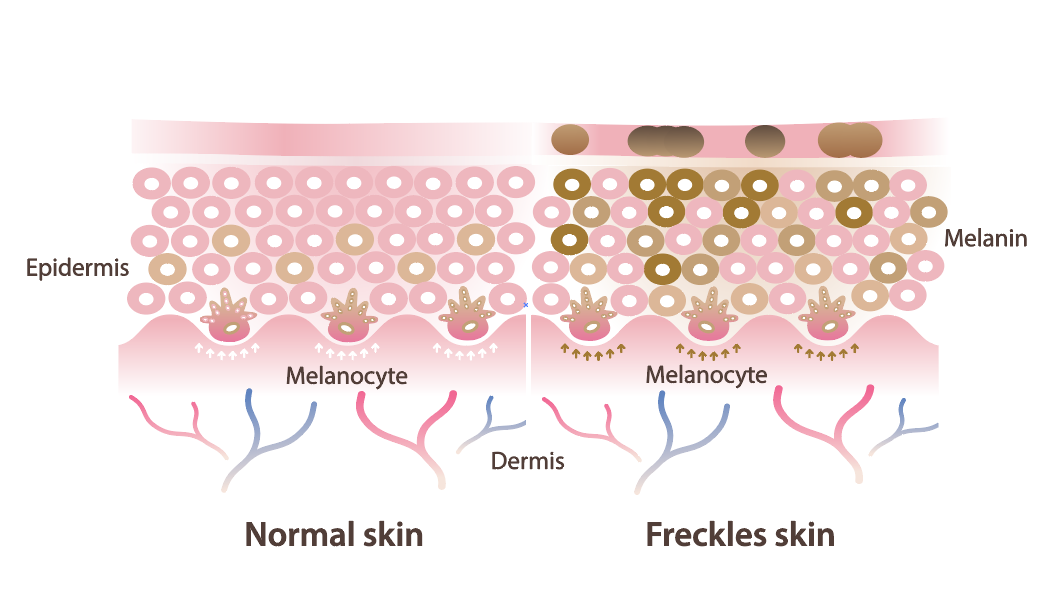
Freckles occur due to excess melanin accumulation, creating small brown spots on the surface.
What Causes Freckles?
Freckles can develop due to several factors, including:
- Sun exposure: Ultraviolet (UVA and UVB) rays stimulate melanocytes to produce more melanin to protect the skin. Frequent sun exposure makes freckles darker and more visible.
- Genetics: A family history of freckles increases the likelihood of developing them, especially among people with fair skin or of European descent.
- Hormones: Hormonal changes, particularly in women during pregnancy, while taking birth control pills, or during menopause, can trigger increased melanin production.
- Aging: As the skin ages, skin cell renewal slows, and accumulated sun exposure over time causes more visible freckles, especially solar lentigines and seborrheic keratosis in older adults.
- Other triggers: Daily habits such as skipping sunscreen, constant exposure to blue light from screens, chronic stress, and lack of sleep can also stimulate abnormal melanin production and increase the likelihood of freckles over time.
Types of Freckles
Freckles are generally categorized into four main types, each with unique characteristics:
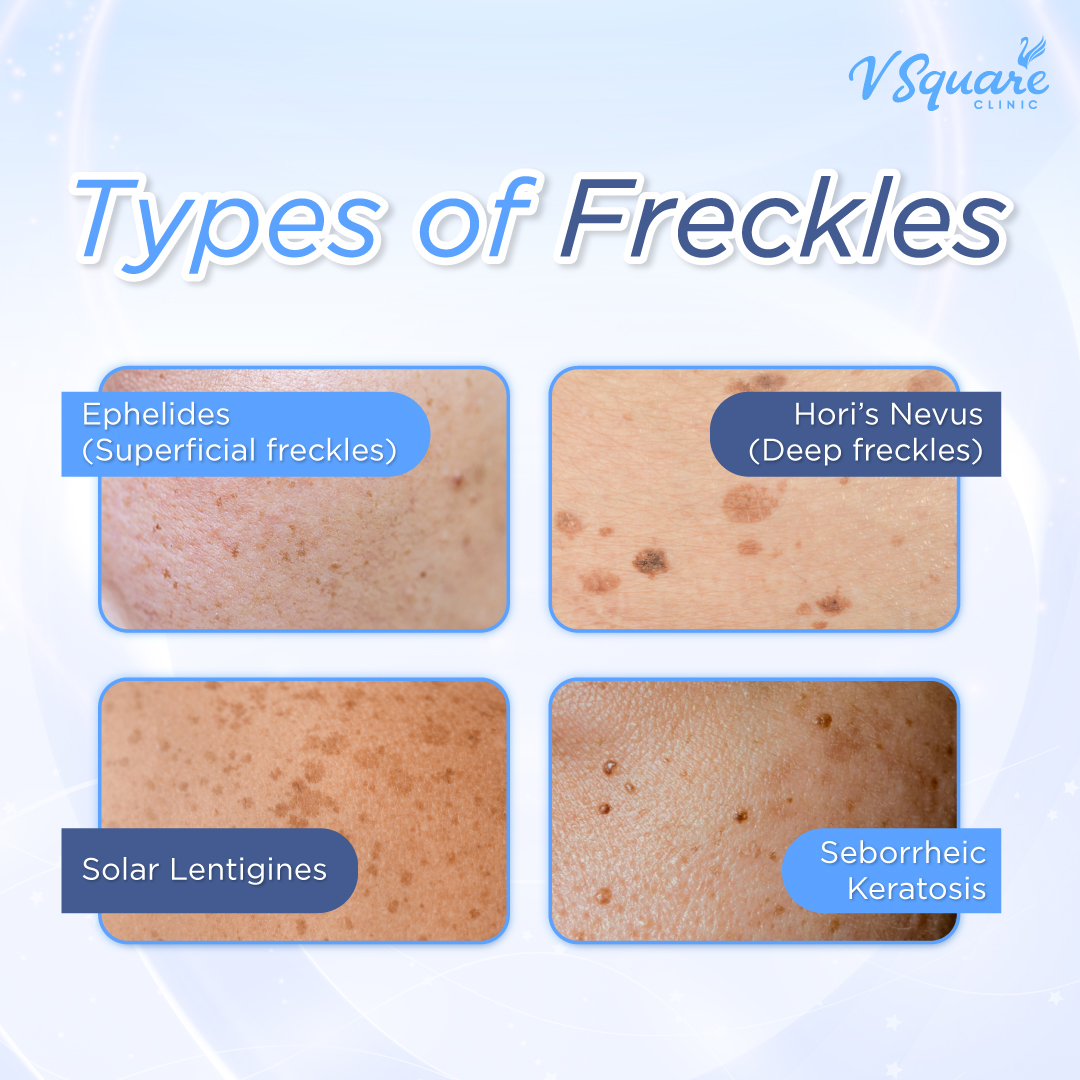
- Ephelides (Superficial Freckles): Small, flat, light-brown spots that appear on the outermost layer of the skin. Commonly seen on the cheeks and nose, usually developing during childhood and darkening with sun exposure.
- Solar Lentigines (Sun Spots): Caused by UV-stimulated pigment accumulation, these spots are larger and darker than superficial freckles, often appearing in older individuals or those frequently exposed to sunlight.
- Hori’s Nevus (Deep Freckles): These bluish-gray or grayish-brown spots form due to pigment deposits deeper in the dermis. They commonly appear around the cheeks and nose.
- Seborrheic Keratosis (Aging Spots): Raised or wart-like brown-to-black lesions caused by abnormal skin cell growth. Common among middle-aged and older adults and may gradually increase in size over time.
Where Do Freckles Commonly Appear?
Freckles can appear on almost any part of the body, but they are most commonly found in areas frequently exposed to sunlight. The most common areas include:
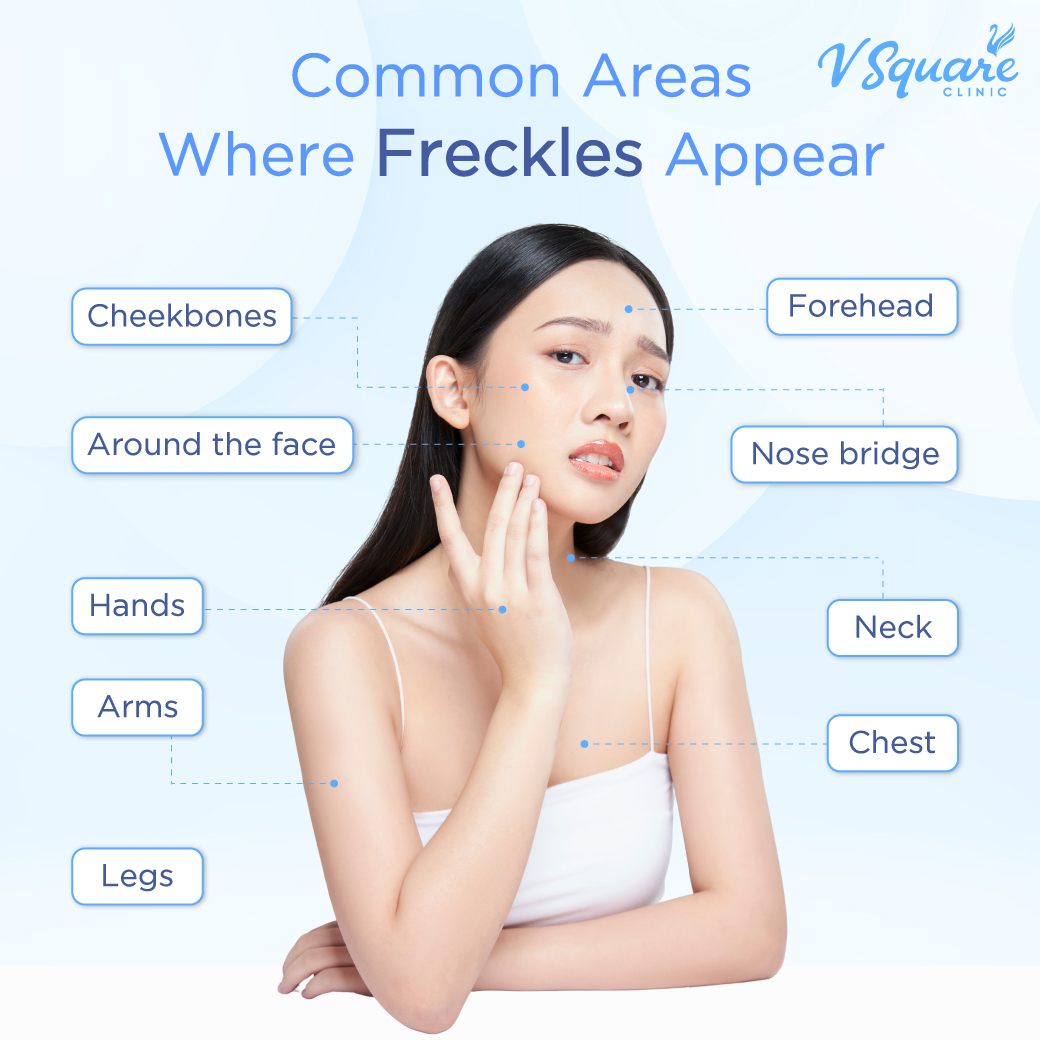
- Facial freckles: Typically seen on the cheeks, nose bridge, and forehead, where the skin gets the most sun exposure.
- Neck and chest freckles: Often seen in individuals who wear low-cut tops or clothing that doesn’t cover the skin.
- Freckles on arms and hands: Common among people who work outdoors or are frequently exposed to sunlight.
- Freckles on legs: Especially noticeable in those who wear shorts or skirts, allowing direct sun exposure.
How Can Freckles Be Treated?
Freckle treatment can be done in various ways, depending on the type, depth, and severity of the freckles. Overall, treatment methods are divided into three main groups:
Natural Remedies for Freckles
Natural freckle remedies focus on gentle and safe skincare methods that can be done at home. They are suitable for individuals with sensitive skin or mild freckles, but consistency and time are needed to see visible improvement. These methods are often used as supplementary care alongside other professional treatments.
Examples of natural ingredients that may help lighten freckles:
- Lemon: Exfoliates the skin naturally with citric acid.
- Turmeric: Reduces inflammation and melanin production.
- Aloe vera: Soothes the skin and helps reduce pigment formation.
- Honey + Yogurt: Nourishes the skin and promotes mild exfoliation.
- Cucumber: Hydrates and calms irritation.

Note: Some natural ingredients, such as lemon or fruit acids, may cause skin irritation or increase sun sensitivity. It is best to use them at night and apply sunscreen daily to protect your skin from further UV damage.
Treating Freckles with Cosmeceuticals
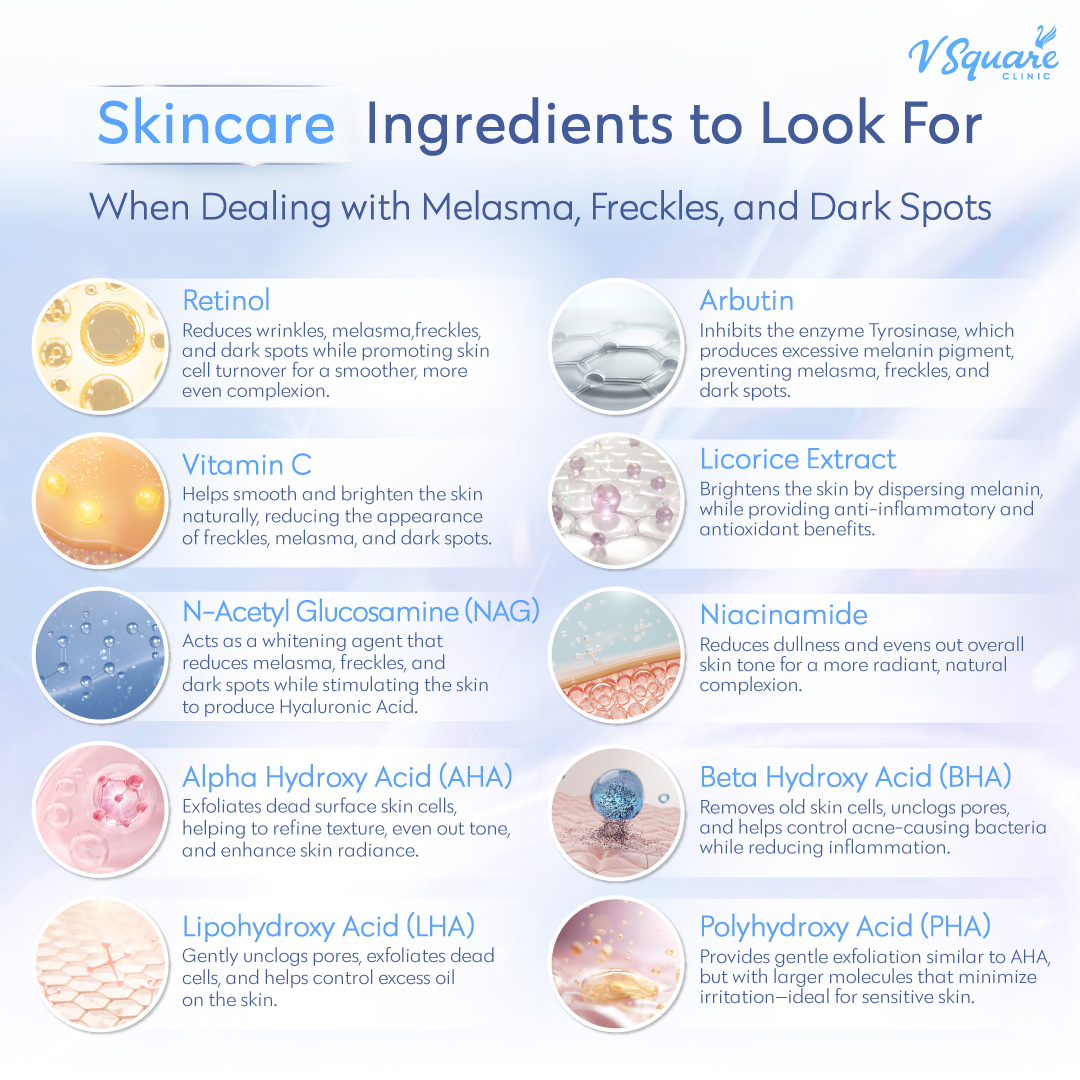
Cosmeceutical treatment for freckles involves using skincare products that contain active ingredients designed to target hyperpigmentation directly. This method generally shows clearer results than natural remedies but still requires consistency and regular use for optimal outcomes. Key ingredients to look for include:
- Retinol: Promotes cell turnover, reduces fine lines, dark spots, freckles, and melasma, leaving the skin smoother.
- Acids (AHA, BHA, LHA, PHA): Exfoliate dead skin cells, unclog pores, and brighten the complexion — suitable for superficial freckles and post-acne marks.
- Vitamin C: A powerful antioxidant that inhibits melanin production, reduces dark spots and freckles, and brightens the skin.
- Arbutin: Inhibits the enzyme tyrosinase, which plays a key role in melanin synthesis, helping to fade freckles and pigmentation.
- Niacinamide (Vitamin B3): Improves uneven skin tone, reduces dullness, and strengthens the skin barrier.
- Licorice Extract: Soothes inflammation, suppresses melanin production, and gently brightens the skin.
- N-Acetyl Glucosamine (NAG): A whitening agent that reduces freckles and dark spots while promoting natural hyaluronic acid synthesis.
Medical Treatments for Freckles
Medical procedures offer the fastest and most visible results for treating freckles, especially for those with numerous, dark, or deep freckles that topical or home treatments cannot effectively reach. The most suitable treatment technique is determined based on professional skin evaluation.
- Laser Freckle Removal: The most popular method. Laser energy targets and breaks down abnormal pigment clusters, which are then naturally eliminated by the body. Effective for superficial freckles, sun spots, and certain types of deep freckles.
- IPL (Intense Pulsed Light): Uses multiple wavelengths of high-intensity light to break down pigment. Best for treating superficial freckles and sun spots while brightening overall skin tone.
- Chemical Peeling: Involves applying acids to exfoliate deeper skin layers, helping to remove surface freckles and dark spots for smoother, brighter skin.
- Cryosurgery: Uses liquid nitrogen at very low temperatures to freeze and destroy abnormal pigment-producing cells. Often used for seborrheic keratosis or certain types of solar lentigines.
- Mesotherapy (Brightening Injection): Involves injecting nourishing agents directly into the middle layer of the skin to inhibit melanin production and fade freckles, melasma, and dark spots, while rejuvenating and brightening the overall complexion.
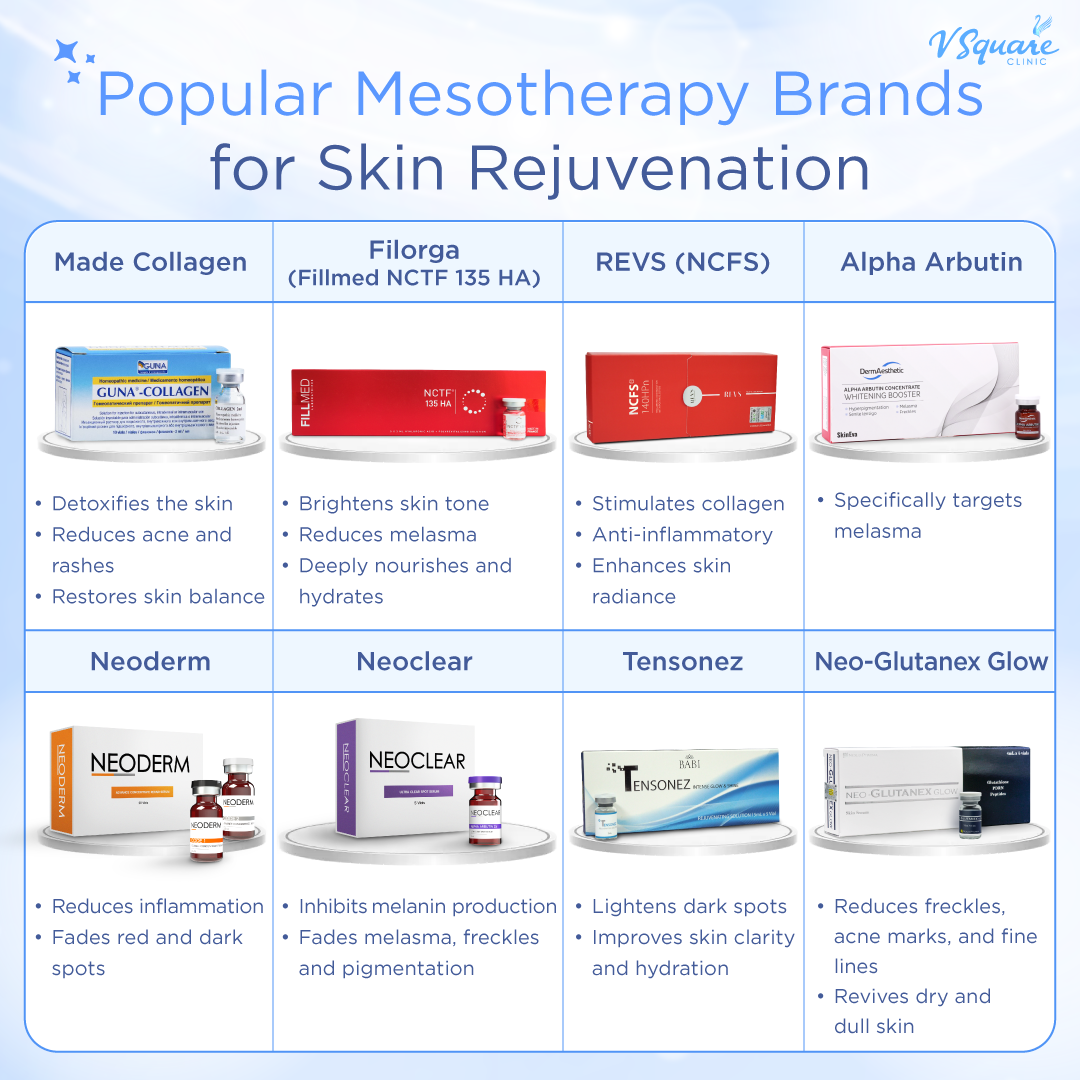
At V Square Clinic, several Mesotherapy formulas are available:
- Tensonez: Enhances skin brightness.
- Neoclear: Reduces melanin production and targets freckles and dark spots.
- Filorga: Revitalizes dull skin.
- Neo-Glutanex Glow: Brightens and deeply hydrates the skin.
- Alpha Arbutin: Focuses specifically on fading melasma and freckles.
Each patient’s skin is carefully evaluated to ensure the most suitable formulation for their individual condition.
Targeted Freckle Treatment with Laser Technology
Laser technology has evolved significantly, making freckle and pigmentation treatment more precise, safer, and less likely to cause side effects. Each laser type is designed to target pigment in different skin layers, allowing tailored treatment for each freckle type:
Pico Laser for Superficial, Deep, and Sun-Induced Freckles
Pico Laser (Picosecond Laser) is a cutting-edge technology developed specifically for pigmentation issues. It emits ultra-short pulses of laser energy—measured in picoseconds (one trillionth of a second)—to shatter melanin into microscopic particles, allowing the body to clear them quickly and naturally without damaging surrounding tissue.
Key Benefits:
- Effectively reduces abnormal pigmentation, freckles, melasma, and dark spots.
- Treats multiple skin issues with one device.
- Minimal scabbing and fast recovery.
Best for: Superficial freckles, deep freckles, sun spots, melasma, dark marks, redness, and shallow acne scars.

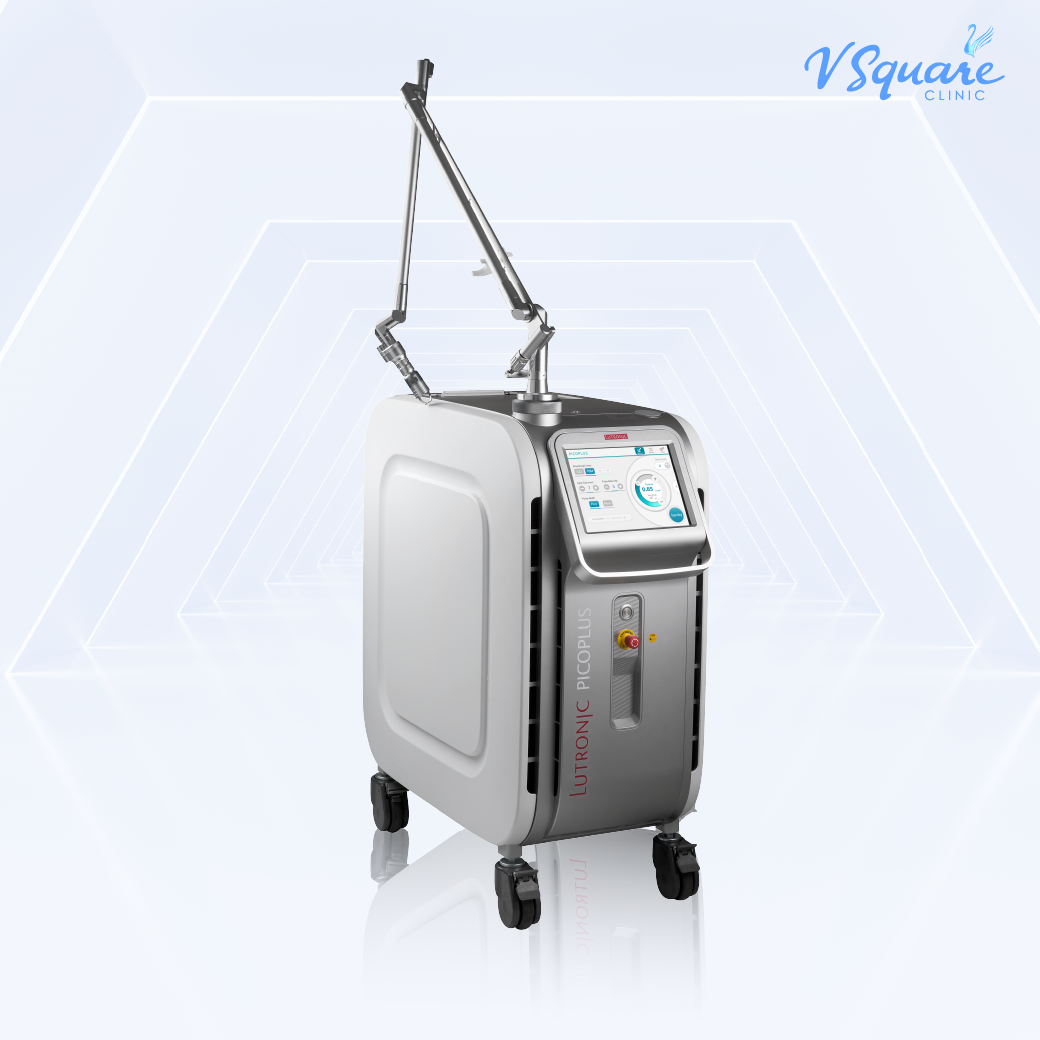
Picosure Pro on (Left) – Pico Plus (Right)
Fotona Laser for Seborrheic Keratosis, Skin Resurfacing, and Mole Removal
Fotona Laser uses Duo Wavelength Technology, combining Er:YAG 2940 nm and Nd:YAG 1064 nm in one system.
For raised skin lesions such as seborrheic keratosis, moles, or skin tags, the Er:YAG laser is primarily used. It gently removes excess tissue with high precision without damaging surrounding skin, promoting a smoother texture through controlled resurfacing.
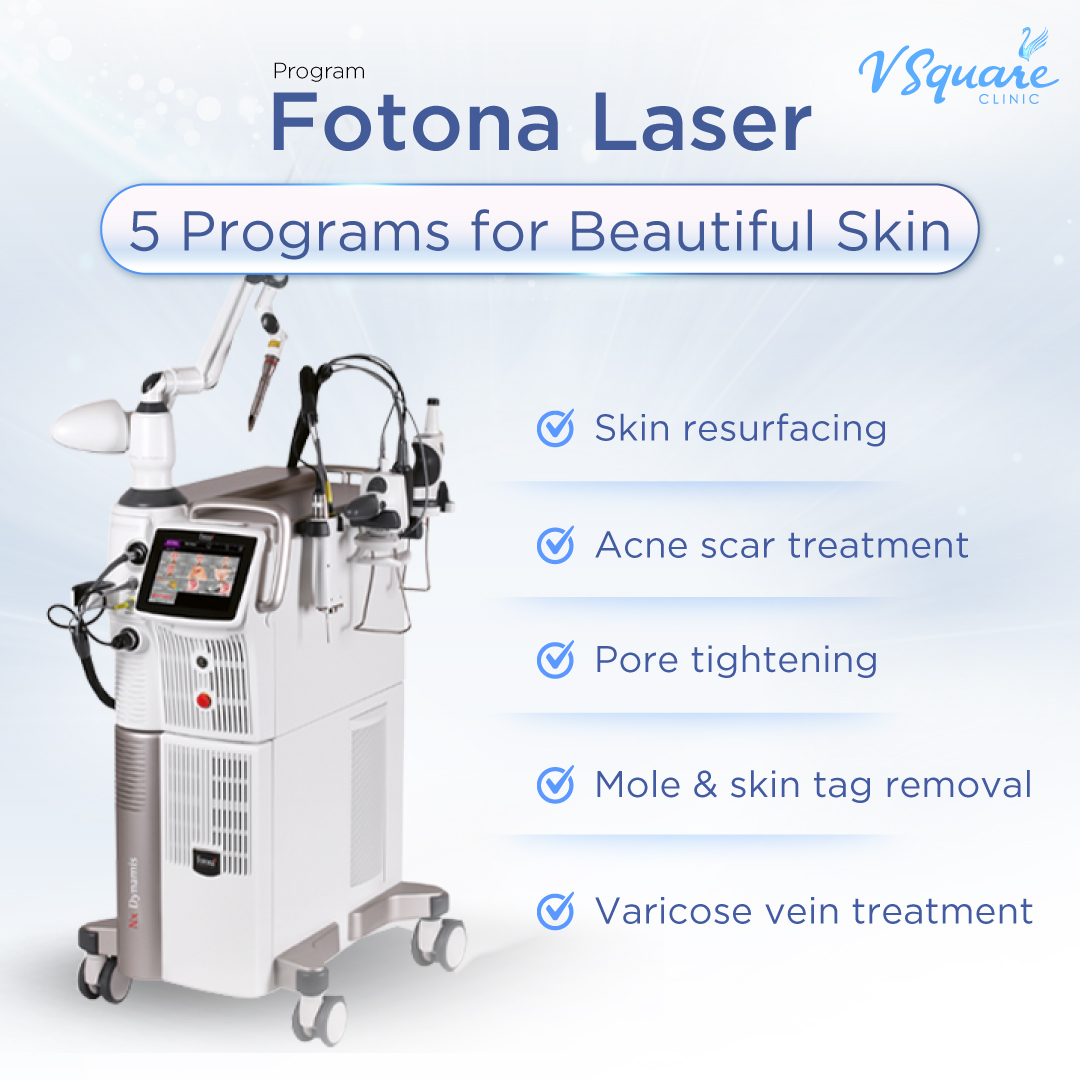
Key Benefits:
- Precisely removes raised freckles or keratosis with smooth wound edges and no bleeding.
- Stimulates collagen and elastin production for stronger, rejuvenated skin.
Best for: Seborrheic keratosis, moles, skin tags, or those seeking smoother and brighter skin through gentle resurfacing.
Why Are Freckle Laser Treatments at V Square Clinic So Effective?
At V Square Clinic, freckle laser treatments are performed by highly experienced doctors specializing in laser skin rejuvenation. Each case begins with a detailed facial assessment and 3D scan to analyze pigmentation levels, pore density, and overall skin condition. Personalized treatment plans are then designed and closely monitored to ensure patients achieve the best visible results.
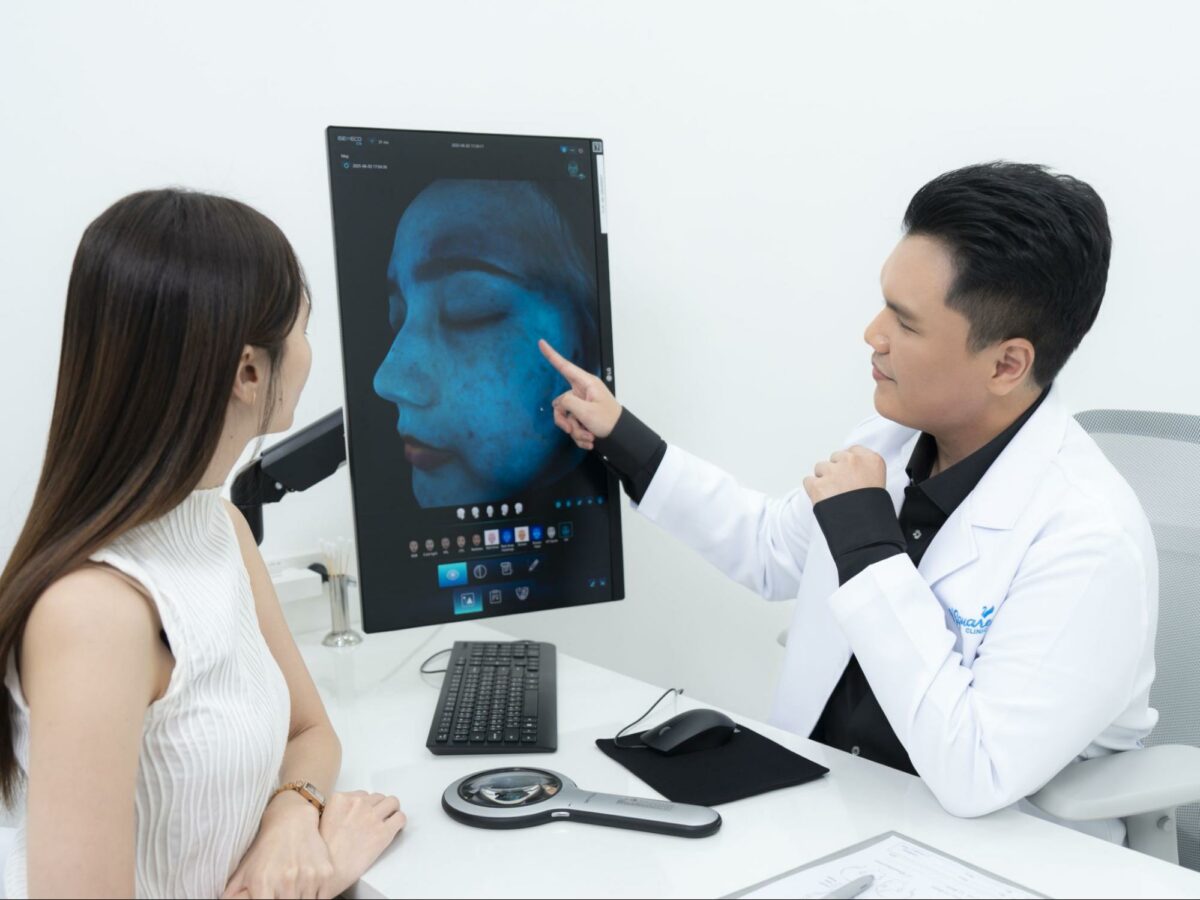
Doctors use the ISEMECO 3D skin analysis system, which measures pigmentation depth,
pore density, and skin balance with high precision.
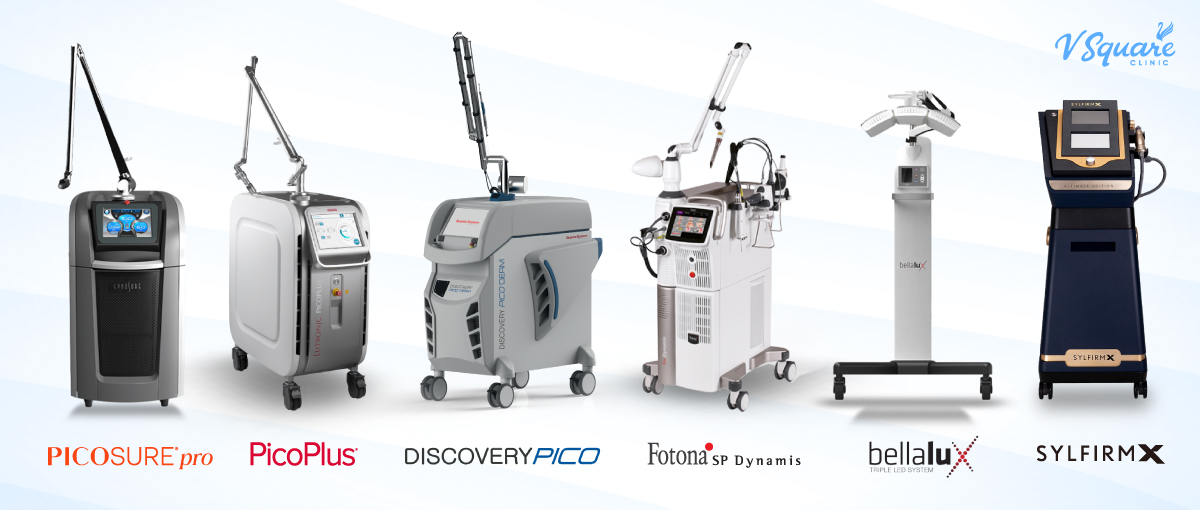
Only authentic, FDA-approved laser devices are used at V Square Clinic. With a wide range of top-tier laser technologies — including Picosure Pro, Pico Plus, Fotona Laser, Bellalux Lite, and Sylfirm — treatments can be customized and combined to match each patient’s skin condition. This ensures effective results for freckles, melasma, dark spots, and acne marks — all in one place.
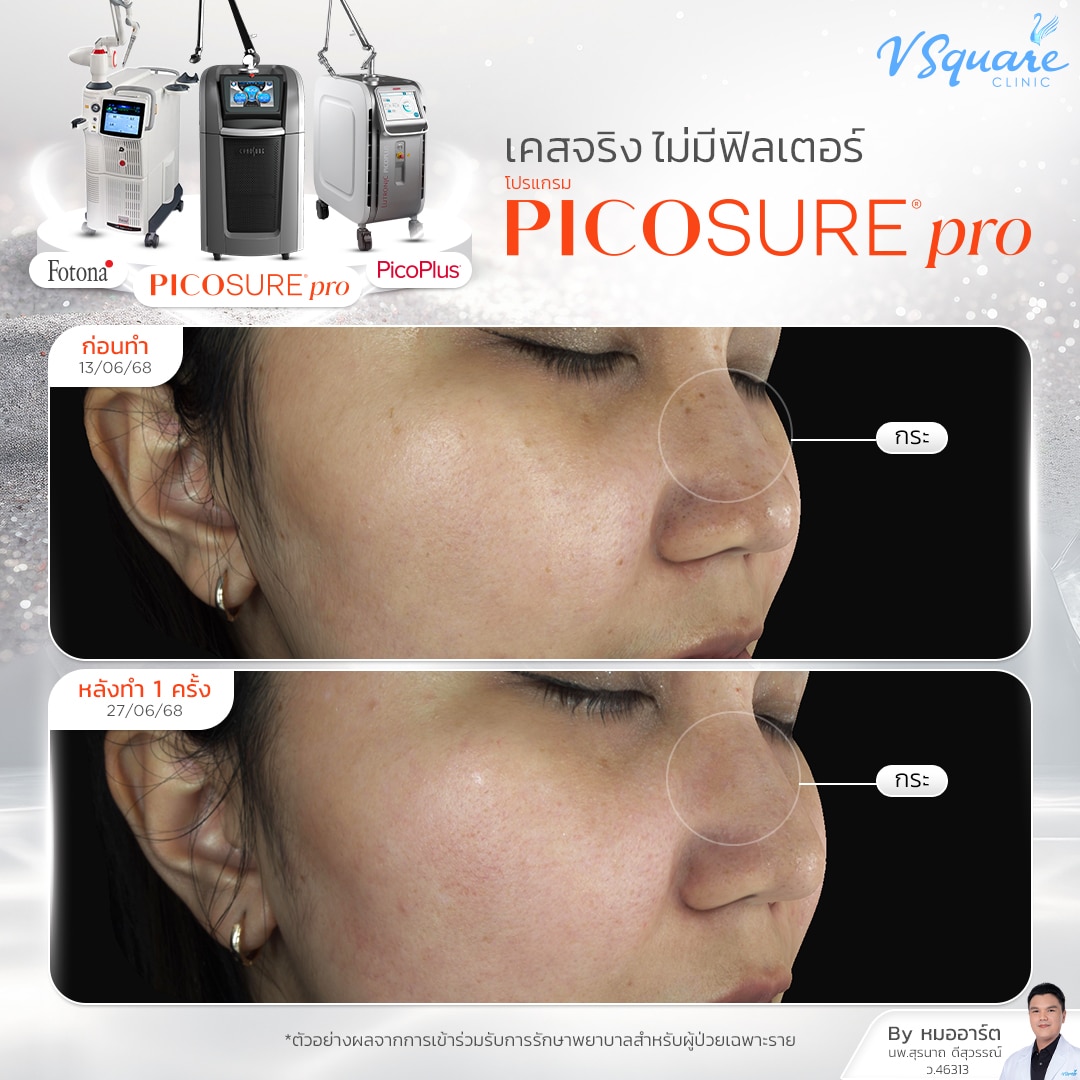
Freckle Laser Treatment Reviews at V Square Clinic
Before-and-after results after one session
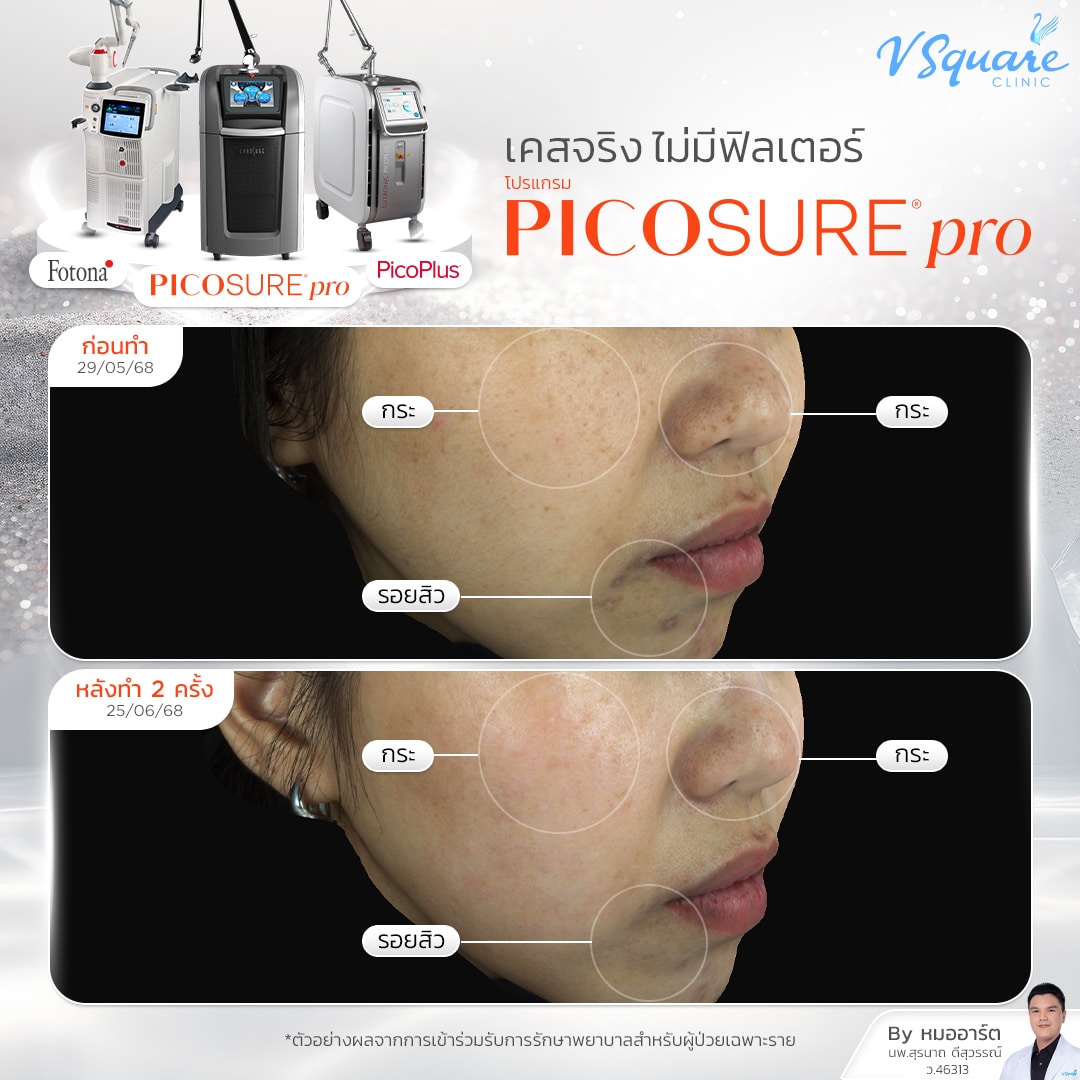
Freckle and acne mark laser results after two sessions
Freckle Laser Price Promotion 2026
Freckle laser treatment at V Square Clinic starts from 9,900 THB per session. Prices may vary depending on current promotions — contact us for the latest details.
Interested in freckle laser treatment at V Square Clinic?
Click to check the latest promotional prices.

How to Prevent Freckles
Proper daily skincare is key to reducing the risk of freckles, preventing existing spots from darkening, and minimizing the formation of new ones. Here are some dermatologist-approved prevention tips:
- Avoid strong sunlight between 10:00 a.m. and 4:00 p.m. when UV rays are most intense.
- Apply sunscreen daily with at least SPF 30 and PA+++, and reapply every 2–3 hours when outdoors.
- Wear hats or use umbrellas when exposed to sunlight to reduce direct UV exposure on the face.
- Use UV-protective sunglasses to protect the thin, sensitive skin around the eyes.
- Reduce blue light exposure from phones and computers by using eye-comfort modes and taking breaks every 20 minutes.
- Incorporate antioxidants such as Vitamin C, Vitamin E, or Niacinamide into your skincare routine to reduce pigment formation and protect against pollution.
- Avoid irritating products, as inflammation can trigger abnormal pigmentation.
- Get enough sleep and manage stress, since hormonal imbalances from fatigue or stress can increase freckle formation.
Frequently Asked Questions About Freckles and Dark Spots
Are Freckles Dangerous?
Generally, freckles are harmless and not a skin disease. They’re simply pigment irregularities. However, if any spot changes color, becomes darker, develops uneven borders, grows quickly, or starts bleeding, it’s best to see a dermatologist to rule out more serious conditions.
Can Freckles Go Away on Their Own?
Some freckles, such as sun spots and superficial freckles, may fade naturally with consistent sun protection and proper skincare. However, deeper or hereditary freckles typically do not disappear on their own and require treatments like laser therapy or cosmeceuticals for visible improvement.
What’s the Difference Between Freckles and Melasma?
Both freckles and melasma are caused by excess pigmentation but differ in how they appear and develop:
- Freckles: Small brown spots that appear due to genetics or sun exposure, often visible from childhood, and darken when exposed to sunlight.
- Melasma: Larger brown or grayish-brown patches caused by hormonal changes combined with sun exposure, commonly seen in adult women or during pregnancy.
Conclusion — “Freckles,” Small Spots That Deserve Attention
Freckles are a common skin issue caused by sunlight, genetics, or hormones. While they are not dangerous, leaving them untreated can cause the pigment to darken and make removal more difficult later on. Consistent sun protection, together with the right freckle laser treatment, can safely restore smooth, clear, and radiant skin.
Reference
- https://aesla.com/picosure-pro-755nm-picosecond-laser-th/
- https://www.cynosurelutronicemea.com/product/picosure-pro/
- https://www.fotona.com/en/products/2026/sp-dynamis/
- https://pubmed.ncbi.nlm.nih.gov/32410249/
- https://pubmed.ncbi.nlm.nih.gov/28979660/

สำหรับผู้อ่านทุกท่านที่มีข้อสงสัยเพิ่มเติม ทีมแพทย์ V Square Clinic ทุกคนยินดีให้คำปรึกษาฟรี โดยไม่มีค่าใช้จ่าย หรือสามารถปรึกษาหมอทาง inbox facebook หรือ Line นี้ได้เลยครับ หมอตอบเองครับ

What Is a Weight Loss Pen? How It Works & How to Choose the Right Option for Effective Results
Reading Time: 10 minutesObesity has become a major global health concern, leading many people to seek weight-loss methods that are both safe and effective. A weight loss pen, also known as a weight loss injection pen, is one of the medical innovations that has gained significant popularity in recent years

Wegovy Weight Loss Pen (Semaglutide): A Medical Approach ...
Reading Time: 10 minutesWegovy is a weight-loss pen developed in Denmark, containing the active ingredient Semaglutide. It is a treatment option designed to help individuals with obesity reduce weight and lower long-term health risks associated with excess body fat.

What Is Sinusitis? Causes, Treatments, and Ways to Streng...
Reading Time: 7 minutesSinusitis is becoming increasingly common, affecting around 15% of the general population. Although the condition is not typically dangerous and can be fully treated, inadequate self-care may lead to chronic symptoms or complications that require longer treatment.

What Visceral Fat Is — 9 Ways to Reduce VF Levels and Low...
Reading Time: 11 minutesMany people think visceral fat is the same as the belly fat you can see or pinch. In reality, visceral fat also surrounds vital organs such as the liver, intestines, and heart. Because of its location, it provides important clues about overall health.

Get to Know inBo — A New Korean-Swedish Botox with Fast R...
Reading Time: 8 minutesinBo is a new-generation botulinum toxin that has been gaining a lot of attention thanks to its high purity, fast onset, natural-looking results, and brand transparency. The manufacturer clearly discloses both the bacterial strain and its production origin, which many patients appreciate.

Best Ways to Tighten Enlarged Pores for Smoother Skin — W...
Reading Time: 14 minutesEnlarged pores can make the skin appear uneven and affect overall confidence. Today, there are many ways to tighten pores — from skincare ingredients and topical treatments to medical-grade procedures.