
Barbed thread lift for facial tightening and contouring
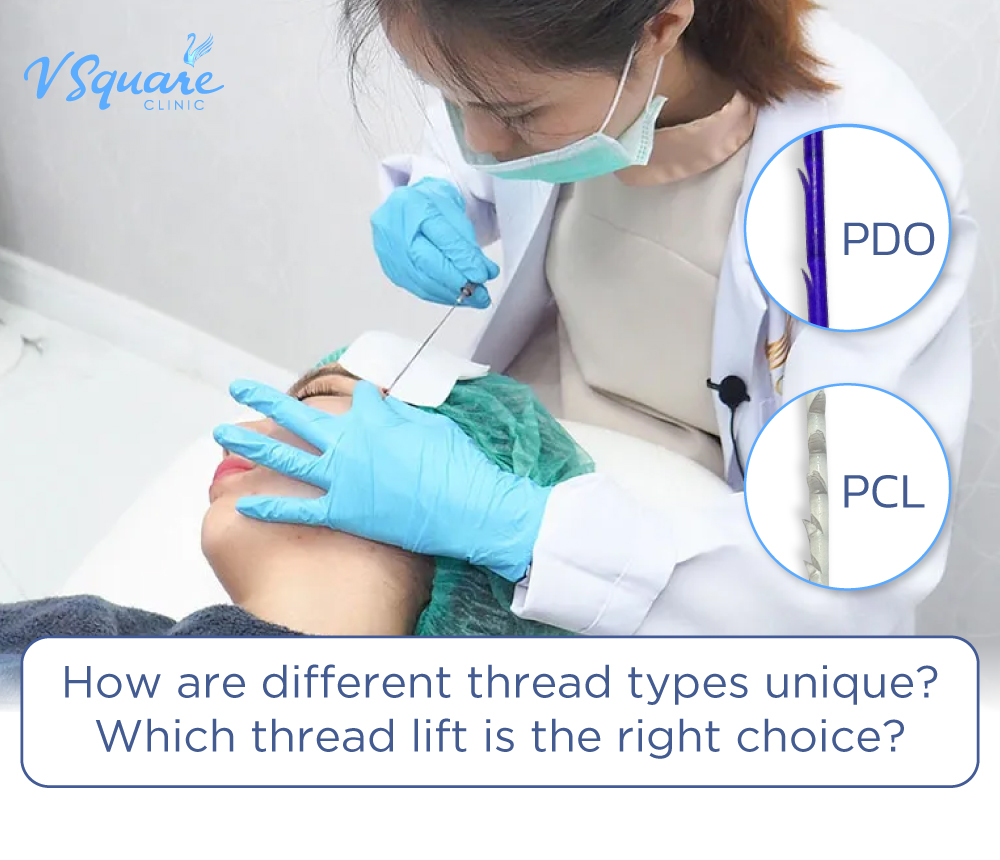
A barbed thread lift is the commonly used term for dissolvable Barbed threads in medical procedures that lift and tighten the face. In Thailand, the name “Barbed thread” () was created by doctors to make it easier for patients to understand, since the barbs resemble small fishbones.
For anyone researching barbed thread lifts — what they are, what they look like, and which type is considered the most effective — this article provides clear guidance to help you make an informed decision.
Table of content : Barbed Thread Lift
What is a barbed thread lift?
A barbed thread, medically known as a bidirectional barbed thread, is a dissolvable thread with tiny barbs resembling fishbones. In Thailand, it is often called “Fishbone thread”, though the proper medical term is “Barbed thread.”
A barbed thread lift uses these threads to lift and tighten sagging skin, contour the face into a slimmer, more defined shape, and stimulate collagen and elastin production. The threads are available in several types depending on the material, including PDO, PLLA, and PCL.
Who is suitable for a barbed thread lift?
- Individuals with sagging cheeks or loose skin.
- Those who want a more defined facial contour, such as a V-shape face.
- Younger patients who already have mild skin laxity and would benefit from a tightening treatment.
How many types of barbed thread lifts are there?
In Thailand, barbed thread lifts are often marketed under various names such as 8D threads, Rose Thorn threads, Piranha threads, Crocodile threads, Dragon threads, Shark Fin threads, Ruby threads, Double-Lock threads, or Tornado threads.
However, in medical practice, these names do not represent significantly different types. They are all essentially bidirectional Barbed threads, with the varied names created mainly for marketing purposes.
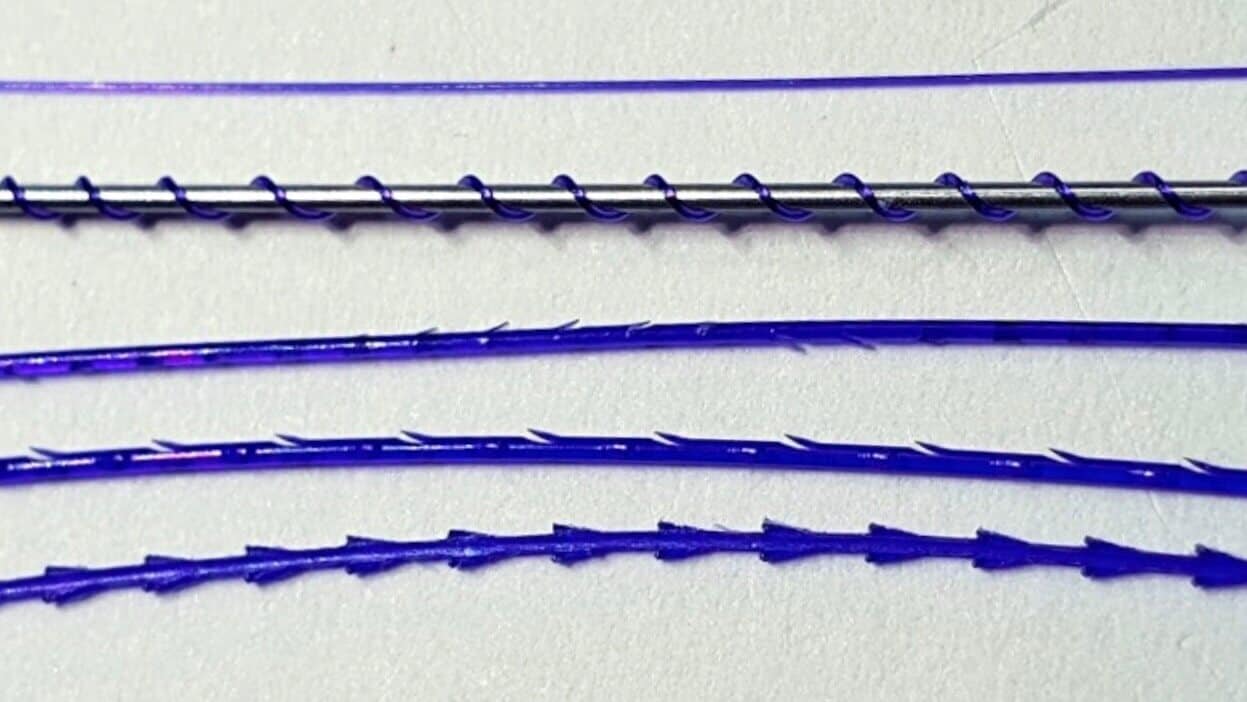
The key factors patients should focus on are the material and size of the threads. Medically safe thread materials are divided into three main categories: PDO, PLLA, and PCL.
Thread thickness is measured using international standards such as USP 2-0, USP 0, USP 1, and USP 2. These two factors—material and size—determine the quality of the thread, how long it lasts, how quickly results appear, and how effectively it can lift and tighten the skin.
Characteristics of the best barbed threads
The best Barbed threads should have the following qualities:
- Made from materials that dissolve slowly, ensuring longer-lasting lifting results.
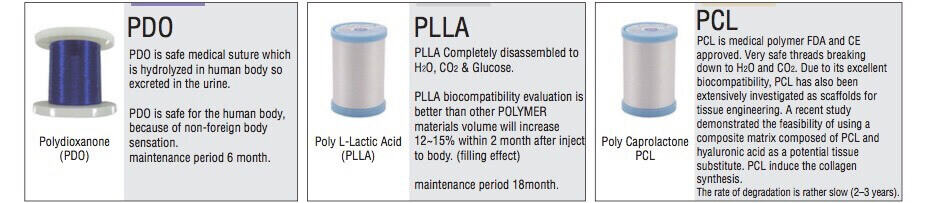
The materials used for barbed thread lifts are dissolvable medical-grade sutures that are safe for use in clinical procedures — the same types often used in cardiac surgery. These include PDO, PLLA, and PCL.
While the threads gradually dissolve, they also stimulate the body’s natural production of collagen and elastin, helping the treated area become firmer, tighter, and more resilient over time.
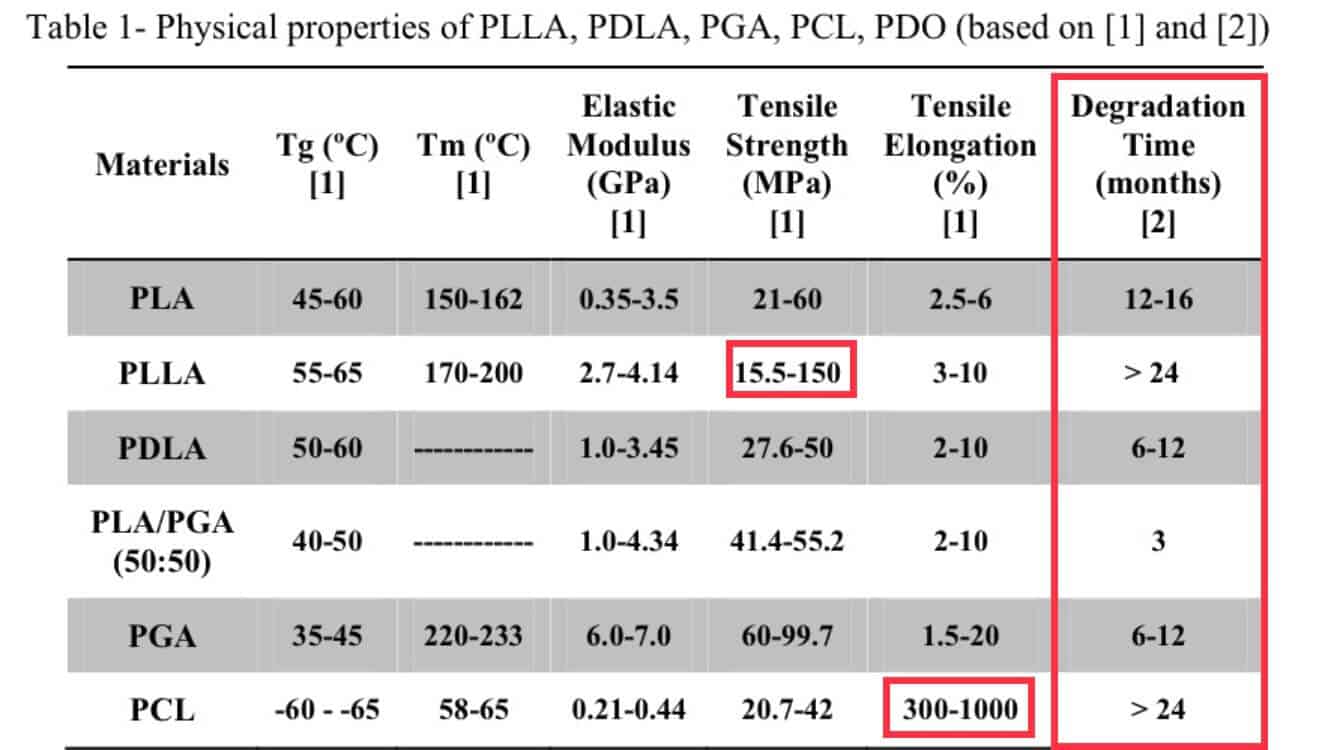
- PDO (Polydioxanone) – Medium flexibility and softness, not brittle. PDO was the first type of thread introduced in the aesthetics field and remains widely used today.
- PLLA (Poly-L-Lactic Acid) – Known for its firmness, though more brittle and prone to breakage.
- PCL (Polycaprolactone) – Highly flexible. The latest generation of PCL is combined with PLLA in an optimal ratio, making PCL+PLLA the most advanced and durable thread material currently available.
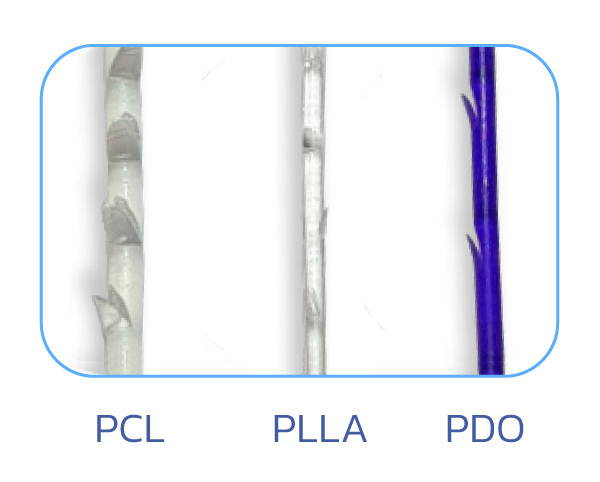
How long does a barbed thread lift last?
- PCL (Polycaprolactone): Fully dissolves in about 18–24 months
- PLLA (Polylactate): Fully dissolves in about 12–18 months
- PDO (Polydioxanone): Fully dissolves in about 6–8 months
It is important to note that although PCL+PLLA threads can last 18–24 months, the lifting effect may not always remain for that entire duration. In patients with weakened skin structures lacking collagen and elastin, the support may diminish sooner, as the skin can detach from the threads before they fully dissolve.
This can be corrected by placing additional threads along the same lines. By then, the previously inserted threads will have already stimulated elastin production, allowing the skin to adhere better in subsequent treatments and resulting in longer-lasting improvements over time.
How are different types of barbed threads unique?
This video demonstrates the differences between various types of barbed threads. If you are considering a thread lift, watching it can give you a clearer picture of the available options.
Larger barbed threads dissolve more slowly and last longer
Threads with larger diameters and bigger barbs take longer to dissolve, meaning they provide longer-lasting lifting results.

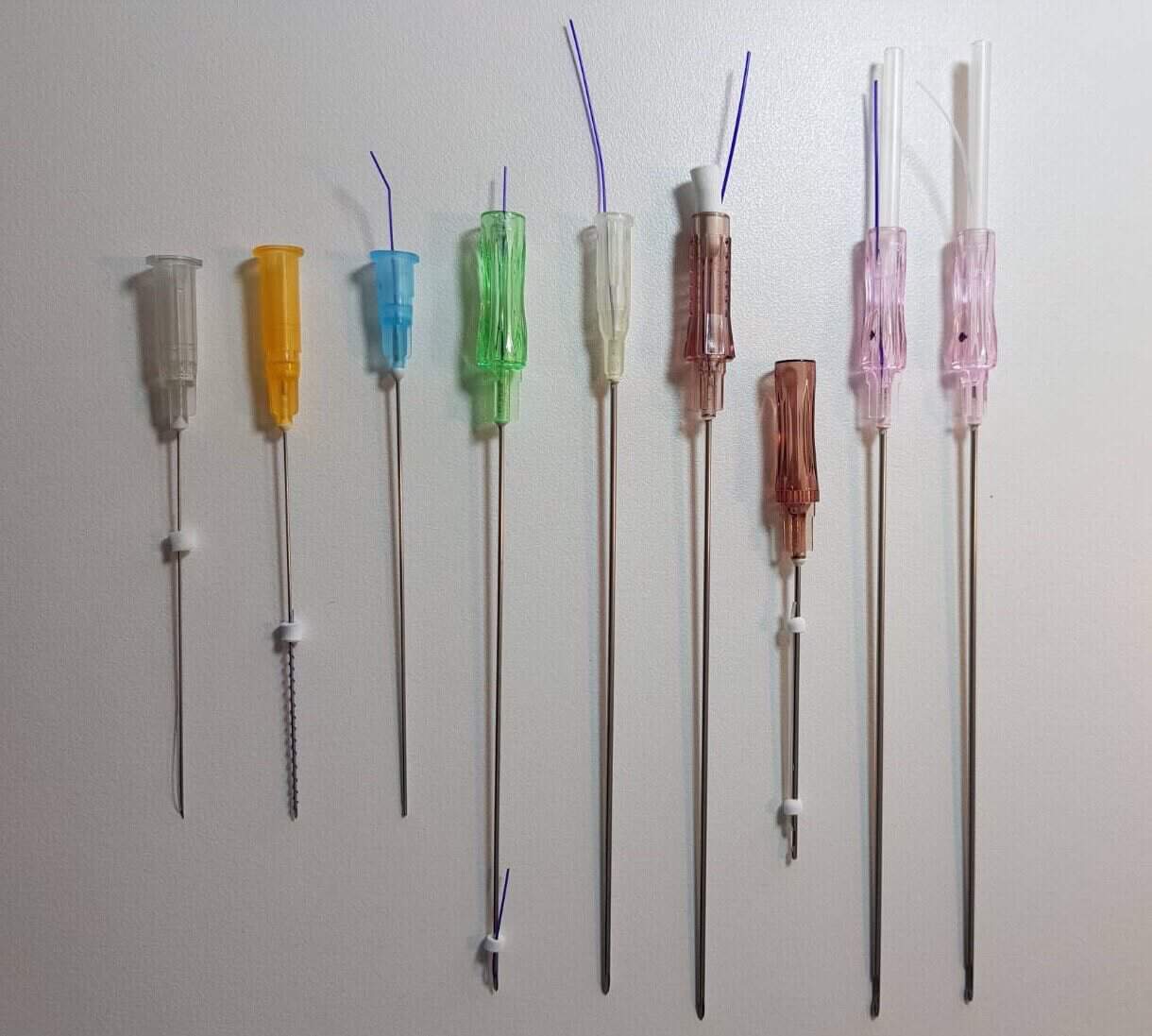
Barbed thread sizes can be identified by the needle color used during the procedure:
- Grey needle 27G → USP 5-0
- Orange needle 25G → USP 4-0
- Blue needle 23G → USP 3-0
- Green needle 21G → USP 2-0
(commonly used in general clinics because it’s easier to insert, causes less swelling and bruising, and requires less skill — but the threads are thinner and less durable) - Light yellow needle 20G → USP 0
- Brown needle 19G → USP 1
- Pink needle 18G → USP 2 (currently the thickest barbed thread available)
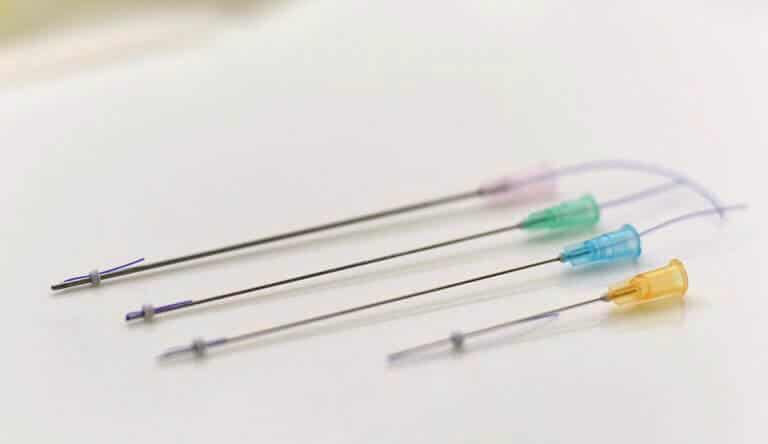
In most general clinics, Barbed threads typically come in sizes USP 3-0 or 2-0, which correspond to blue needles (23G) or green needles (21G).
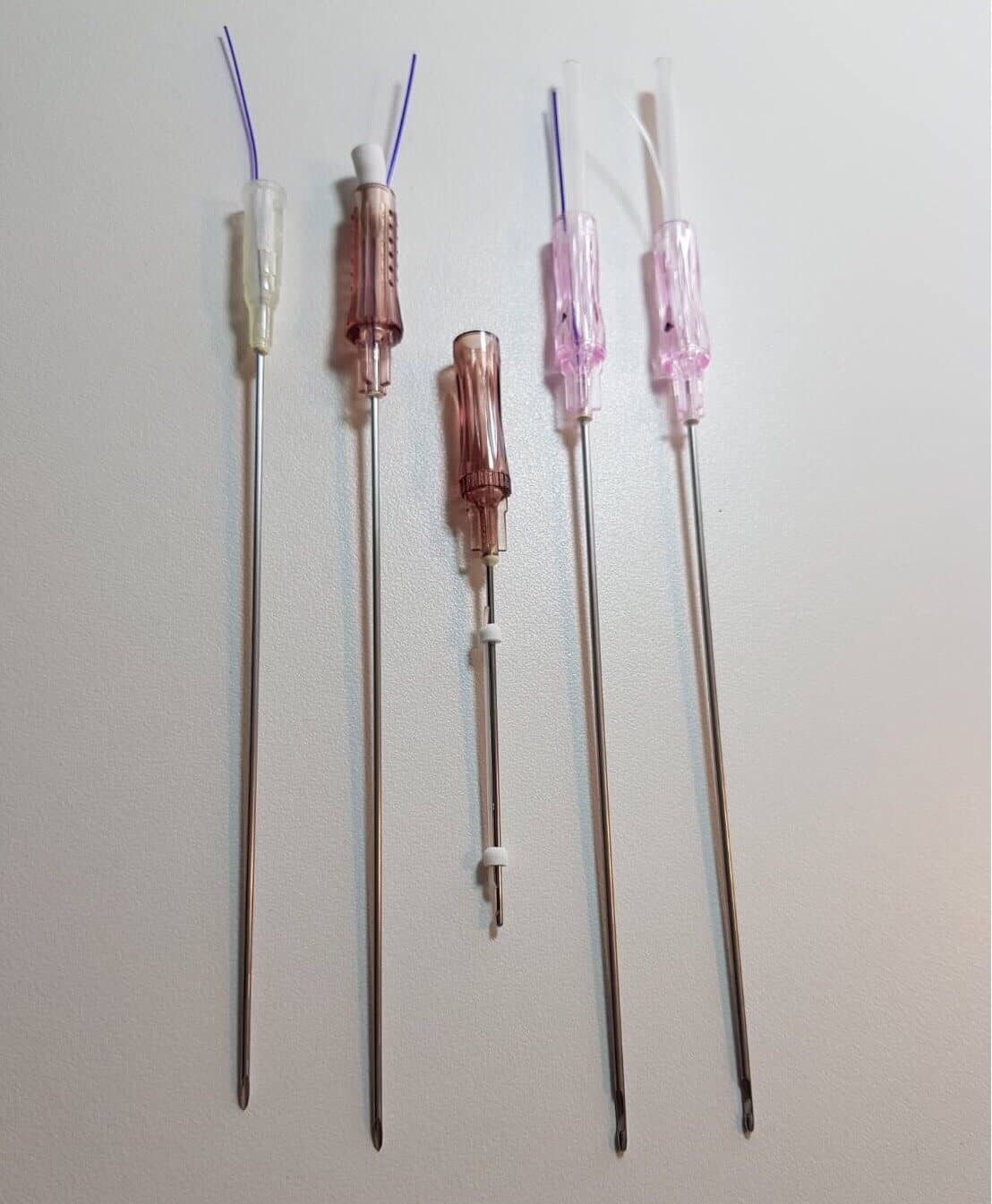
At V Square Clinic, we use the largest Barbed threads available today: USP 2, USP 1, and USP 0. The corresponding needle colors are pink (18G), brown (19G), and light yellow (20G).
Barbed threads should have high flexibility
As explained earlier, PCL threads have the highest flexibility, making them resistant to facial movements and less likely to break. In contrast, PLLA threads are firm and resistant to tension but more brittle, which makes them prone to snapping in areas with frequent movement.
Barbed threads that stimulate collagen production
Among the three types, PLLA threads stimulate the production of collagen and elastin the most. For this reason, the latest PCL threads are blended with PLLA to strengthen the skin’s structure after the thread lift and provide longer-lasting results.
Besides barbed threads, are there other types?
In addition to Barbed threads mentioned earlier, threads can also be categorized into 6 main types based on their structure and design.
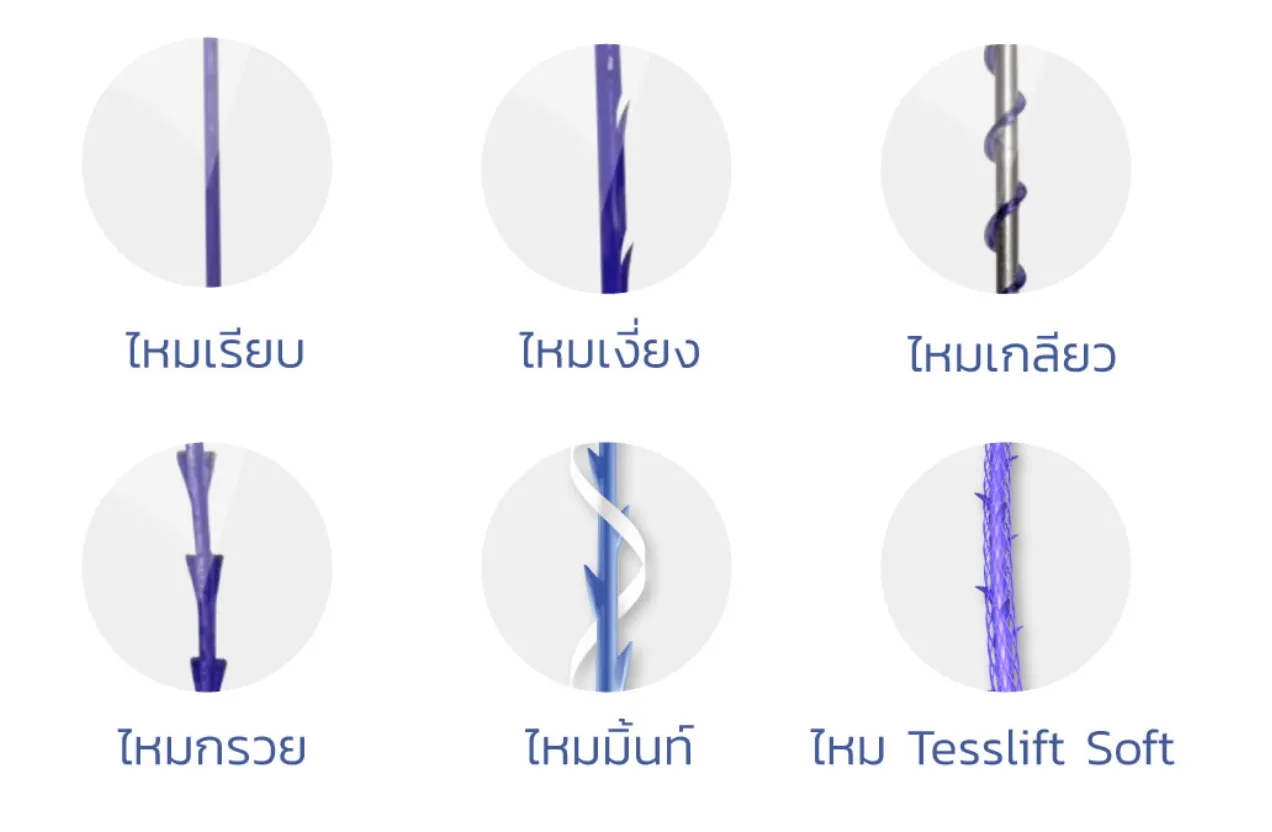
Currently, the 3 most popular types are Barbed threads (Cog threads), Mint Lift threads, and Mesh threads (Tesslift Soft).
- Barbed threads or Cog threads (top middle): These are dissolvable threads with barbs that extend outward, designed to hook onto the skin and lift it upward. They can be classified as large Cog threads or small Cog threads, depending on thickness.
- Mint Lift threads (bottom middle): An advanced version of barbed threads, developed to enhance lifting power and create a slim V-shaped contour. Their unique 360-degree, 3D barb design provides stronger anchoring in multiple directions. The material is also more durable and less prone to breakage.
- Mesh threads or Tesslift Soft (bottom right): Barbed threads encased within a mesh structure. The key advantage is their superior strength—up to 80 times more resistant to tension compared to regular threads. In practice, 1 Mesh thread is equivalent to 2 regular Barbed threads, making them highly effective for lifting and supporting sagging skin.
Why do some people say thread lifting doesn’t work?
About 5–10 years ago, thread lifting was not widely used. Most procedures involved Mono threads—short, thin threads inserted into the superficial skin layer. These worked similarly to fillers by improving fine lines but could not actually lift or tighten the skin.
As a result, the improvement seen in the first 2–3 weeks mainly came from swelling. Once the swelling subsided, little to no effect remained. Many patients felt disappointed after spending a significant amount of money, which led to the belief that thread lifting does not work.
Nowadays, almost no clinics perform Mono-thread lifts for facial tightening. Patients who want results similar to mono threads usually prefer Hifu, since it lasts longer and provides clearer results.
Currently, most procedures use Barbed threads (Cog threads), which deliver real lifting effects at a reasonable price. This has made thread lifting popular again.
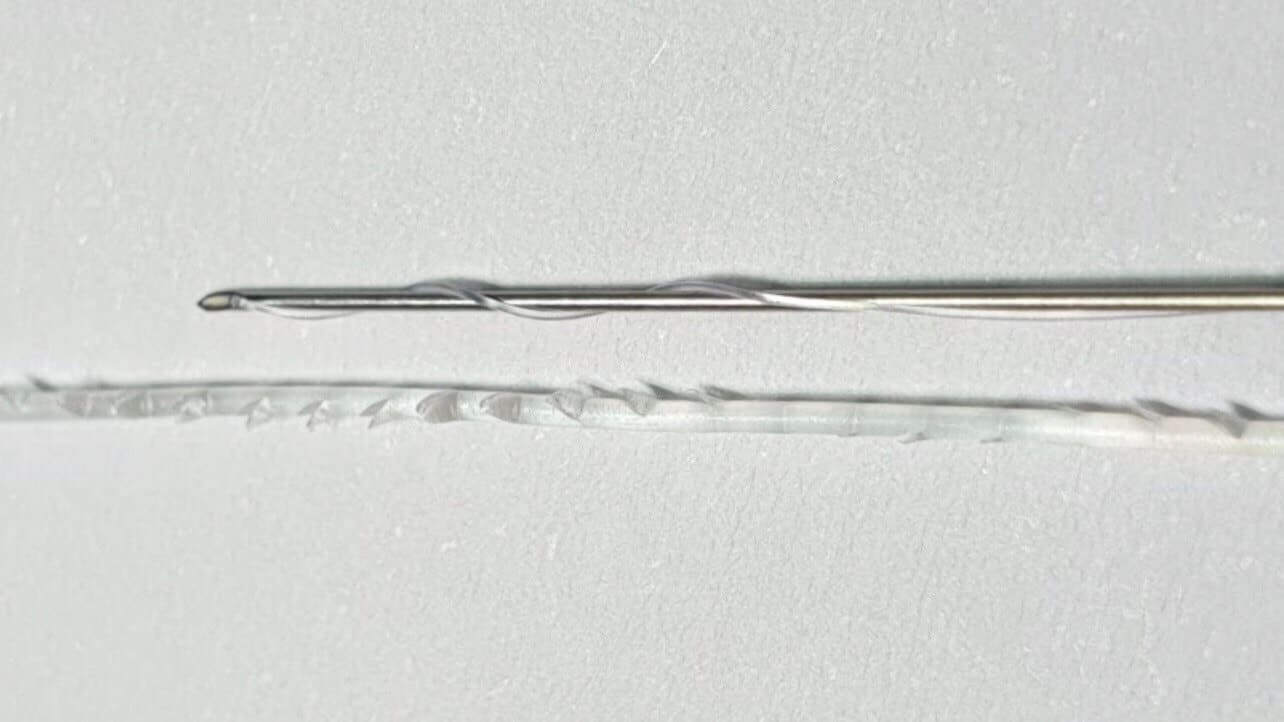
The image above compares Mono threads (top) with Barbed threads (bottom).
Mono thread lifts in the past showed little effect because they lack barbs to hook onto and lift sagging skin.
Thread Lift with Barbed Threads: Helps Tighten and Reshape the Face
Barbed thread lifting can help reshape the face, making it slimmer and more lifted. It effectively corrects sagging cheeks.
In addition, Barbed threads can also be used for nose thread lifts, enhancing the nose bridge, as well as reducing wrinkles and stimulating collagen under the skin.
How Many Barbed Threads Should Be Used?
The doctor will assess each case individually to determine how many Barbed threads should be placed per side. On average, 3–10 threads per side are used, depending on:
- Cheek volume
- Skin firmness
- Specific areas the patient wants lifted
The number of threads is adjusted as needed. If patients want longer-lasting results, more threads can be used—similar to adding extra ropes to support a load, which increases stability and durability.
How Much Does Barbed Thread Lifting Cost?
At V Square Clinic, only the best Barbed threads are selected, using the largest size available. Two materials are offered:
- PDO threads: 6 threads, starting from 8,900 THB
- PCL threads: 4 threads, starting from 14,000 THB
Interested in getting a Barbed thread lift at V Square Clinic?
Click here to view the latest promotions.

Barbed thread lift at V Square Clinic is performed by highly experienced doctors using genuine, high-quality Barbed threads.
We also provide real patient review cases for consideration, giving peace of mind before the procedure. After treatment, our doctors offer proper aftercare guidance and continuous follow-up to ensure the best results.
Barbed thread lift Reviews at V Square Clinic
Here are real patient reviews from those who have undergone barbed thread lifting at V Square Clinic.
Immediately after the procedure, visible improvements can be seen—the face looks lifted, firmer, and more contoured.
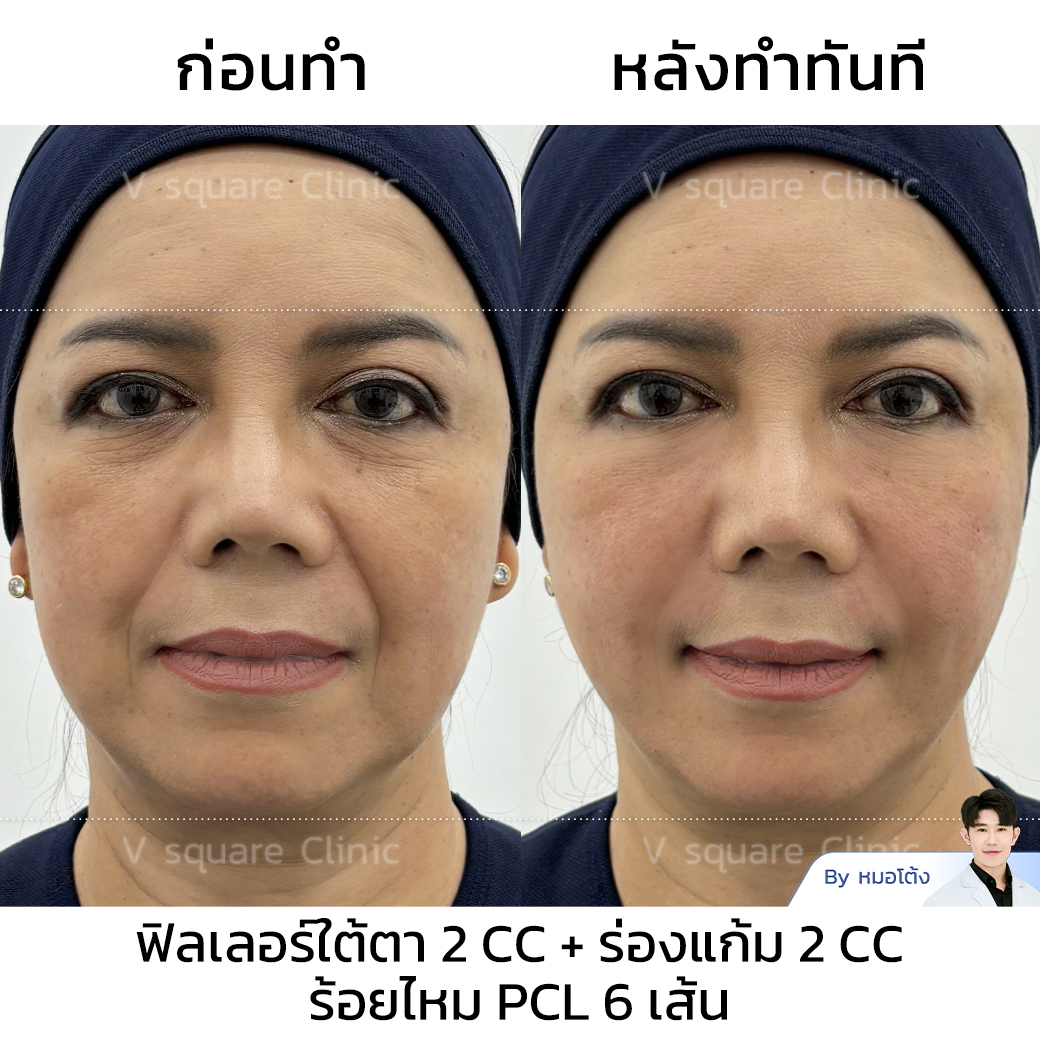
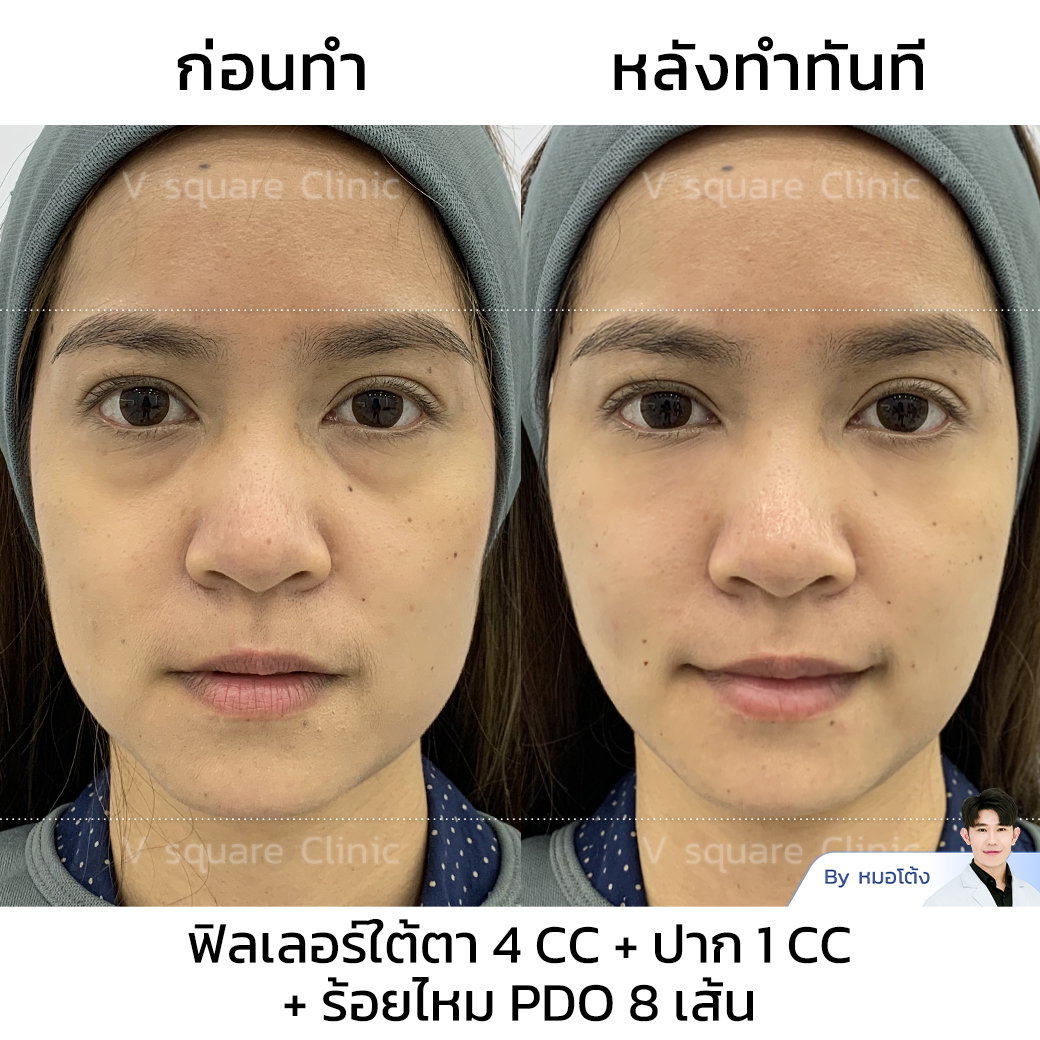
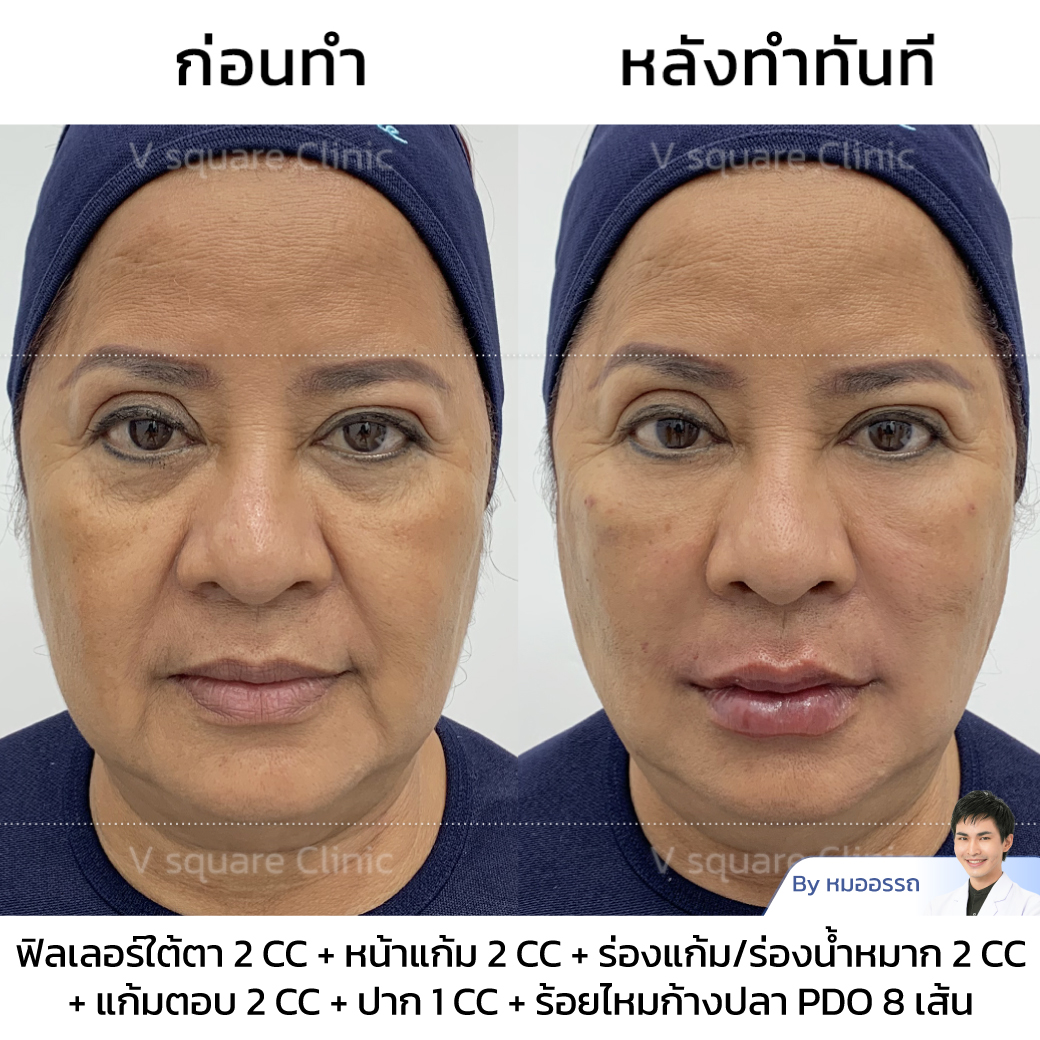
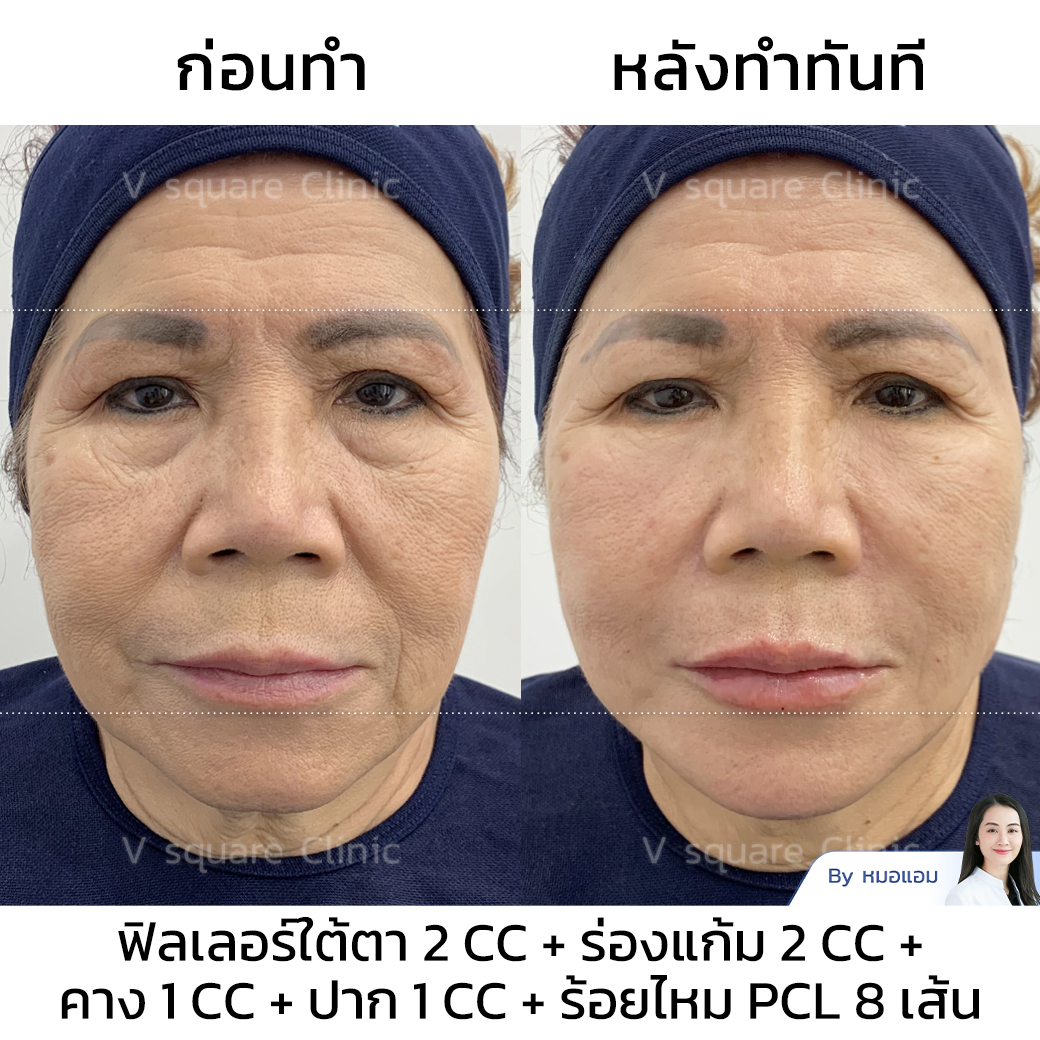
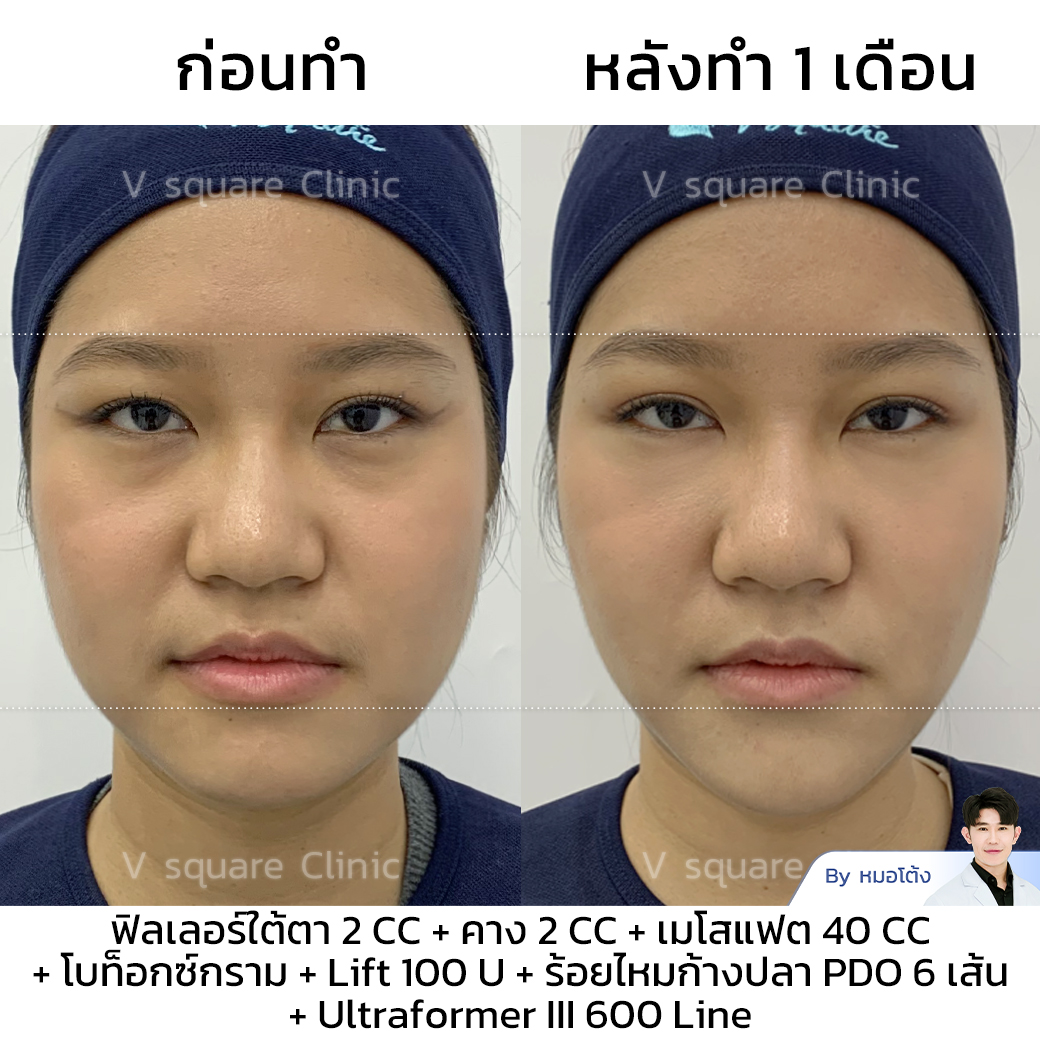
*Results may vary depending on individual cases.
How Soon Can You See Results from Barbed Thread Lifting? How Many Days Will Swelling Last?
Barbed threads (Cog threads) act like small hooks that lift the skin immediately after the procedure, so results can be seen right away. During the first 3–4 days, swelling tends to increase, then gradually subsides and stabilizes within 14 days.
However, if swelling and redness worsen after 4 days, accompanied by increasing pain, patients should promptly return to the doctor for evaluation and additional medication.
With today’s advanced Barbed thread techniques—such as local anesthesia, the use of blunt cannulas, and proper pre- and post-care instructions—most patients experience only mild swelling, which improves by 80% within 7–14 days.
As shown in the review photos mentioned earlier, most patients have minimal swelling and bruising immediately after the procedure.
Does Barbed Thread Lifting Hurt?
Before Barbed thread lifting, the doctor will administer local anesthesia. Once it takes effect, the procedure is generally not painful, though patients may feel the threads being inserted, which is normal.
Can Barbed Threads Be Repeated?
Yes, Barbed thread lifting can be repeated once the skin starts sagging again.
Typically, the lifting effect lasts for about:
- PDO threads: 4–5 months
- PCL threads: 12 months
Patients can consult with their doctor to assess whether it’s the right time for another treatment.
Will Barbed Threads Cause Fibrosis (Scar Tissue)?
Fibrosis may occur when low-quality materials are used, such as gold threads or non-absorbable threads, which are now banned and no longer in use.
Conclusion — Is Barbed Thread Lifting Worth It?
Whether Barbed thread lifting is a good option depends largely on choosing a certified clinic and an experienced doctor. A skilled practitioner can analyze each patient’s concerns and recommend the most suitable approach, ensuring safe and effective results.
For those interested in Barbed thread lifting but still unsure which type of thread is best, how many threads are needed, or what results to expect, we offer a free consultation with our experienced doctors at V Square Clinic.
Reference
- A.C. Vieira, J.C. Vieira, R.M. Guedes, A.T. Marques. EXPERIMENTAL DEGRADATION CHARACTERIZATION OF PLA-PCL, PGA-PCL, PDO, AND PGA FIBRES. :
http://iccm-central.org/Proceedings/ICCM17proceedings/Themes/Behaviour/SUSTAIN%20GREEN%20COMP/F23.9%20Vieira.pdf

สำหรับผู้อ่านทุกท่านที่มีข้อสงสัยเพิ่มเติม ทีมแพทย์ V Square Clinic ทุกคนยินดีให้คำปรึกษาฟรี โดยไม่มีค่าใช้จ่าย หรือสามารถปรึกษาหมอทาง inbox facebook หรือ Line นี้ได้เลยครับ หมอตอบเองครับ

What Is a Weight Loss Pen? How It Works & How to Choose the Right Option for Effective Results
Reading Time: 10 minutesObesity has become a major global health concern, leading many people to seek weight-loss methods that are both safe and effective. A weight loss pen, also known as a weight loss injection pen, is one of the medical innovations that has gained significant popularity in recent years

Wegovy Weight Loss Pen (Semaglutide): A Medical Approach ...
Reading Time: 10 minutesWegovy is a weight-loss pen developed in Denmark, containing the active ingredient Semaglutide. It is a treatment option designed to help individuals with obesity reduce weight and lower long-term health risks associated with excess body fat.

What Is Sinusitis? Causes, Treatments, and Ways to Streng...
Reading Time: 7 minutesSinusitis is becoming increasingly common, affecting around 15% of the general population. Although the condition is not typically dangerous and can be fully treated, inadequate self-care may lead to chronic symptoms or complications that require longer treatment.

What Visceral Fat Is — 9 Ways to Reduce VF Levels and Low...
Reading Time: 11 minutesMany people think visceral fat is the same as the belly fat you can see or pinch. In reality, visceral fat also surrounds vital organs such as the liver, intestines, and heart. Because of its location, it provides important clues about overall health.

Get to Know inBo — A New Korean-Swedish Botox with Fast R...
Reading Time: 8 minutesinBo is a new-generation botulinum toxin that has been gaining a lot of attention thanks to its high purity, fast onset, natural-looking results, and brand transparency. The manufacturer clearly discloses both the bacterial strain and its production origin, which many patients appreciate.

Best Ways to Tighten Enlarged Pores for Smoother Skin — W...
Reading Time: 14 minutesEnlarged pores can make the skin appear uneven and affect overall confidence. Today, there are many ways to tighten pores — from skincare ingredients and topical treatments to medical-grade procedures.